Innovative Biochar Filter Made from Rice Husks Cleans Water of Textile Dyes
August 9, 2026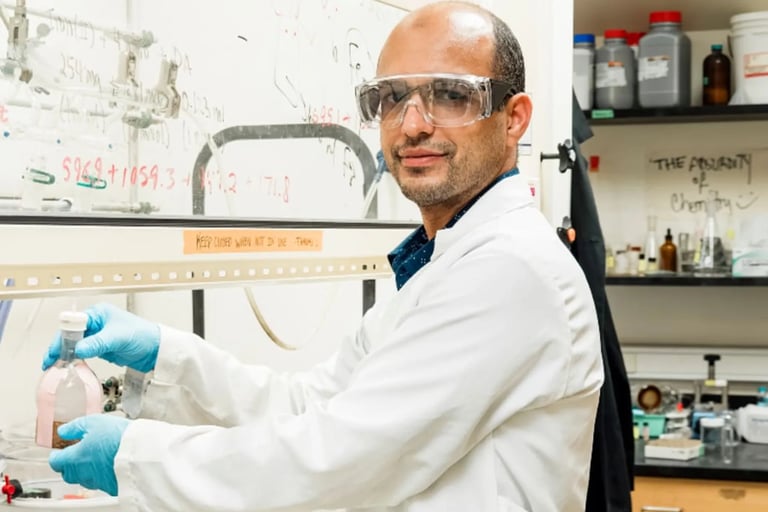

A Florida International University–led team has transformed discarded rice husks into a reusable biochar-based filter that can remove synthetic textile dyes, including brilliant green and malachite green, from water.
The filter is made by converting rice husks into biochar through low-oxygen heating and then combining it with magnesium and aluminum to create a sponge-like material that captures the dyes.
This international collaboration repurposes a vast agricultural waste product to produce a practical water-purification filter with dye-removal capabilities.
Researchers aim to scale up the approach to improve effectiveness and affordability for communities in need of clean water, moving toward real-world deployment.
Initial tests show the biochar filter remains effective for at least five uses, indicating potential for repeated use in water treatment.
The filter’s high surface area enables efficient contaminant trapping, presenting a potentially cheaper and greener alternative to traditional water-treatment materials.
The study, led by FIU chemist Islam Ibrahim Hussein and collaborators, was published in Sustainable Chemistry and Pharmacy and reflects growing interest in circular manufacturing and greener water treatment solutions.
Future work includes expanding research beyond the lab to validate performance in real-world conditions and test the filter’s ability to separate other dyes, heavy metals, and contaminants.
Overall, the project aligns with circular economy goals and scalable applications, emphasizing external testing to broaden dye separation and contaminant remediation beyond laboratory settings.
The innovation tackles two problems at once: reducing agricultural waste from rice husks and mitigating industrial textile dye pollution that contributes to water contamination in many textile-producing regions.
The research, published in Sustainable Chemistry and Pharmacy, underscores the dual benefit of repurposing agricultural waste while addressing widespread dye pollution in textile-dense economies.
The husks are heated in a low-oxygen environment to form biochar, then combined with magnesium and aluminum to create the filtration material, which remains effective for at least five uses.
Summary based on 2 sources
Get a daily email with more Science stories
Sources

Yahoo News • Aug 9, 2026
Florida chemist turns rice husk waste into reusable filter that traps textile dyes
The Cool Down • Aug 9, 2026
Florida chemist turns rice husk waste into reusable filter that traps textile dyes