Apple Appoints John Ternus to Lead Hardware-Driven Innovation and AI Integration
September 1, 2026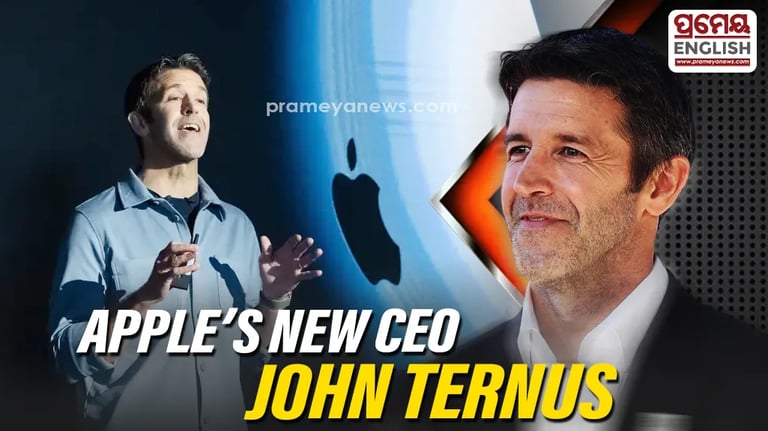

Apple is set to unveil its next iPhone series on September 9, marking the first major event under new CEO John Ternus as he takes over from Tim Cook earlier in the month.
The slate includes a foldable iPhone Ultra, which could lift margins if demand supports higher pricing, with investors eyeing how the change in leadership affects the valuation given Apple’s current earnings multiple.
Apple stock trades around the mid-$300s as the company navigates the CEO transition, buoyed by strong Q3 2026 earnings that fund bets on AI-enabled hardware and services growth.
Expansion in India, SE Asia, Latin America, Africa, and China is viewed as essential for ecosystem growth, balancing localization with a consistent global strategy.
AI is framed as an ecosystem, not a standalone app, emphasizing Siri architecture, private context processing, agentic AI questions, and clear user controls and privacy.
Mac and iPad strategies center on AI capabilities to drive upgrade cycles, with analysts noting fair values near current levels if growth persists, while slowing growth could compress the valuation premium.
AirPods 5 are positioned as AI-enabled wearables with on-device AI, integrated with M-series silicon, aimed at deepening ecosystem lock-in and boosting hardware and services revenue.
Apple faces competition from rapid AI-enabled rivals and tighter memory supply, with critiques citing only incremental updates on flagship devices rather than breakthrough innovations.
The broader market backdrop includes a downbeat S&P 500 session and higher U.S. yields, with focus on whether foldable pricing will justify the valuation.
Spatial computing should extend beyond Vision Pro to lighter devices like glasses, AirPods, Apple Watch, and iPhone, providing contextual information without heavy hardware.
Apple Silicon remains central to strategic independence, with emphasis on diversified suppliers, memory, packaging, and AI infrastructure.
Recent AI and software developments include rival Claude Fable 5.1 and Mythos 5.1 with lower costs and higher accuracy, plus watermarking; OpenAI disputes Apple’s allegations, attributing issues to internal matters rather than theft.
Summary based on 17 sources
Get a daily email with more Tech stories
Sources
TEMPO.CO • Sep 1, 2026
Apple's New CEO John Ternus Makes AI Top Priority
AppleMagazine • Sep 1, 2026
Happy New John Ternus Era: The Engineer Leading a 2.5 Billion-Device World - AppleMagazine

Axios • Sep 1, 2026
Tim Cook's Golden Apple