MASLD/MASH Management Expands Across Specialties Amid FDA Approvals, Screening Advances, and Precision Medicine Push
September 1, 2026

MASLD/MASH is increasingly a multi-specialty management issue driven by two FDA-approved drugs, broader screening guidelines, and noninvasive diagnostics that push screening and risk stratification from gastroenterology into primary care and endocrinology.
When FIB-4 results are indeterminate, second-tier tests like elastography or ELF are required, but capacity constraints risk widening an equity gap in access to testing.
Treatment decisions should be individualized: semaglutide is favored for patients with high cardiovascular or kidney disease risk, while resmetirom suits those without dominant cardiometabolic drivers or when GLP-1RA is unsuitable; do not combine both upfront due to lack of supporting trial data.
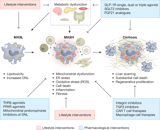
Recent advances include phase 3 results for semaglutide and resmetirom showing histologic benefits, with tirzepatide and other incretin therapies showing potential, and bariatric/metabolic surgery emerging as a meaningful intervention for early-stage liver histology.
Noninvasive fibrosis assessment and prognostic tools (FIB-4, biomarkers, multiomics) play a central role in risk stratification and monitoring treatment response.
Ongoing challenges include disease heterogeneity, variable therapy responses, need for long-term outcomes, and integrating new biomarkers and AI-driven imaging into routine care.
Genetic and molecular insights (PNPLA3, TM6SF2, HSD17B13) and data-driven molecular subtypes are moving MASLD/MASH toward precision medicine with subtype-specific risk assessment and potential targeted therapies.
Clinical guidelines (EASL-EASD-EASO 2024) synthesize current evidence into recommendations for case finding, diagnosis, risk stratification, and treatment.
Two cross-cutting gaps: MetALD necessitates AUDIT-C and phosphatidylethanol testing before treatment decisions, and PNPLA3 genotype risk is not yet for routine management but may inform familial risk discussions.
Noninvasive testing has reduced the role of liver biopsy as a gatekeeper, though elastography/ELF cutoffs vary slightly across guidelines and require adherence to specific counseling frameworks.
The landscape features multiple late-stage therapeutics, promising noninvasive strategies, and a shift toward personalized management of MASLD/MASH.
Referral lines are targeted: primary care and endocrinology handle straightforward cases, gastroenterology/hepatology manage advanced fibrosis or complex scenarios, with MetALD, discordant tests, and treatment-resistant cases needing specialist input.
Summary based on 2 sources
Get a daily email with more Science stories
Sources
Nature • Sep 2, 2026
Current therapeutic landscape and future treatment perspectives of MASH
Medscape • Aug 31, 2026
Two New Drugs, One Shared Disease: Why MASLD Now Crosses Three Specialties