NATO Thwarts Russian Undersea Cable Sabotage in Arctic, Heightens Tensions with Kremlin
September 10, 2026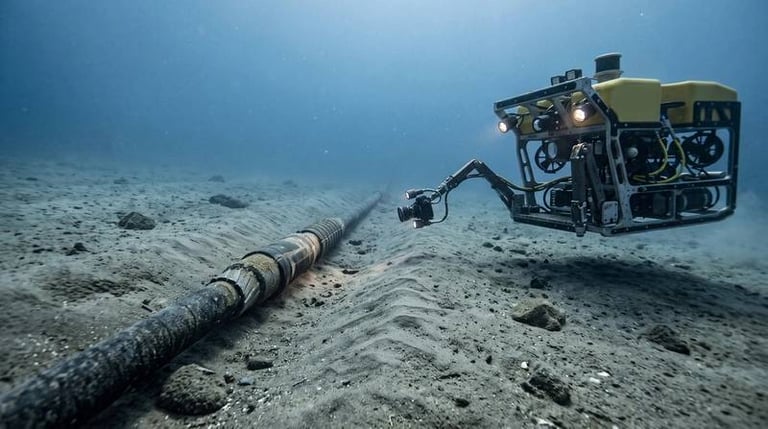


Britain, Norway, and the United States disrupted a covert Russian operation in Arctic waters aimed at testing technology to disable critical undersea cables without leaving traces.
Analysts warn that loitering and surveying seabed assets may precede sabotage, underscoring Europe’s growing dependence on seabed infrastructure and the need to bolster defenses.
The incident feeds Western fears of Kremlin threats to European infrastructure and potential NATO escalation, with Russia denying wrongdoing.
The cables targeted are undersea fiber-optic links that carry the majority of global internet traffic and financial transactions, illustrating the strategic vulnerability of seabed infrastructure.
NATO emphasizes attribution and credible, proportionate responses to hybrid attacks, while public attribution of covert actions remains sensitive and could risk escalation.
Analysts urge resilience planning to cover a broad set of disruption risks, calling for national conversations on defense and civilian protection.
The incident fits a pattern of Russian attempts to threaten critical infrastructure, signaling a need for stronger deterrence and preparedness in Western nations.
Russia’s broader strategy reportedly blends cyber, proxy, and physical sabotage to degrade Western resilience and information networks.
Undersea cables remain geopolitically vital, with prior Russian activity near cables and monitoring vessels highlighting ongoing vulnerability.
The two 1,400-kilometer cables between Svalbard and mainland Norway lie about 2,700 meters deep and connect to the SvalSat ground station, with NASA’s Near Space Network also relying on these links.
The Svalbard-Norway cables are linked to data for SvalSat, and Norway plans an additional cable by 2028.
The confrontation occurred in Arctic waters near Svalbard, where the cables traverse roughly 1,400 kilometers between Svalbard and the Norwegian mainland at deep depths.
Summary based on 14 sources
Get a daily email with more World News stories
Sources

hromadske • Sep 10, 2026
NATO allies foiled Russian test of secret weapon designed to disable undersea cables - Reuters
ET Telecom • Sep 11, 2026
NATO allies foil Russian subsea internet cable sabotage plot
Межа • Sep 10, 2026
NATO Allies Disrupt Russian Undersea Cable Sabotage Exercise Near Svalbard