Rochester to Lead Global Laser Science with $13.7M NSF Backing for World's Most Powerful Laser Facility
September 15, 2026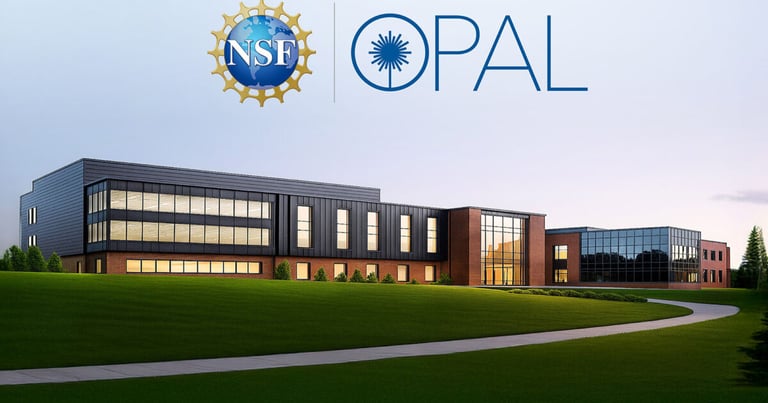

The University of Rochester has secured initial NSF funding to advance the OPAL project into the final design phase, potentially totaling up to $13.7 million, to build a two-beam, high-peak-power laser facility that would become the world’s most powerful laser system and serve as a shared resource for researchers globally.
The final design phase prioritizes workforce development by offering hands-on training for laser facility designers, builders, operators, and users to strengthen the photonics and laser science talent pipeline and enhance collaboration across regions.
Support from political leaders and officials, including U.S. Senators, Representatives, and Governor Hochul, underscores the project’s potential to bolster U.S. leadership in laser technology, national security, energy, medicine, and industry.
The plan details completing the design of a next generation laser facility, advancing high-energy amplifiers, large-aperture optics, and advanced diagnostics, while integrating AI and machine learning into experiment planning, operations, and data analysis from the outset.
The DELIGHT program at the University of Nevada, Reno is contributing diagnostic capabilities for NSF OPAL and other petawatt-class lasers, signaling coordinated multi-institutional development in the field.
NSF OPAL aims to enable breakthroughs in quantum electrodynamics, recreate conditions of the early universe, and drive the development of the most powerful electron accelerator on Earth, reestablishing U.S. leadership in ultrahigh-intensity laser science.
The facility would be built at URochester’s Laboratory for Laser Energetics and operate as a national shared resource, granting access to researchers worldwide and fostering collaboration among five institutions: University of Rochester, University at Buffalo, University of California Irvine, University of Notre Dame, and Plymouth Grating Laboratory.
Summary based on 1 source
Get a daily email with more Science stories
Source
News Center • Sep 15, 2026
NSF advances NSF OPAL toward construction-ready design