AI E-Waste Crisis Looms: 46 Million Tonnes by 2050, Experts Warn of Global Health Risks
September 16, 2026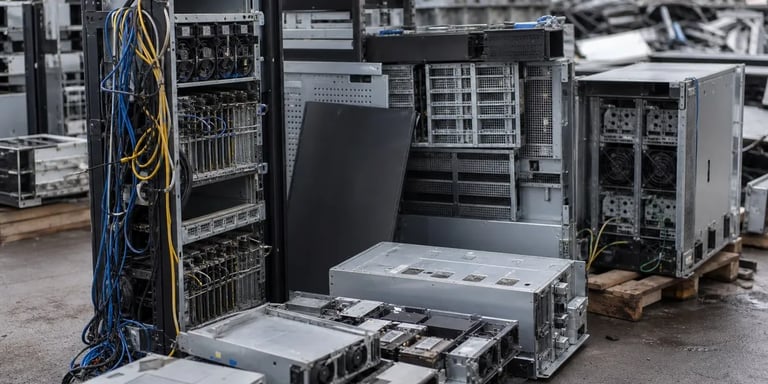


AI-driven e-waste is poised to dwarf prior forecasts, with BAN’s Part 1 projecting 8.6–13.1 million tonnes of AI-related equipment retired annually by 2030 and 31–46 million tonnes by 2050, once including networking, power, storage, cooling, and early scrapping beyond servers and GPUs.
BAN estimates each gigawatt of data-center capacity could generate about 70,000 metric tonnes of e-waste, with total data-center capacity potentially reaching 219 GW by 2030 according to a McKinsey forecast.
The report introduces ‘AI waste proliferation,’ a category covering telecommunications infrastructure and consumer devices that may become obsolete due to AI development.
Regulatory rollbacks threaten accountability for emissions, amplifying health and environmental risks.
The United States has not ratified the Basel Convention and continues to ship e-waste abroad for informal processing, raising health concerns for workers and nearby communities.
Policy proposals include restoring Clean Air Act standards, expanding emissions monitoring, funding health-tracking infrastructure, and pushing for right-to-repair, extended producer responsibility, and stricter waste-export controls.
Although administrations have acknowledged data-center public-health risks, critics say actions have not matched the projected scale of the waste wave.
Research links asthma and increased health costs to emissions from power plants and generators that support data centers.
Experts warn of deteriorating e-waste handling in the US, with contamination risks to water and soil and broader health impacts, including potential rises in asthma and premature deaths.
The waste stream could fill enough shipping containers to circle the globe six times, illustrating the scale if current management doesn’t change.
Current planning for e-waste disposal is lacking, with only about one-fifth properly managed and ongoing problematic export to poorer regions; BAN calls for immediate budgeting and policy action.
A large portion of e-waste is inadequately recycled, much of it exported to polluting operations in developing countries, underscoring the need for strengthened policies and infrastructure.
Summary based on 5 sources
Get a daily email with more World News stories
Sources

The Guardian • Sep 16, 2026
Datacenter rush will create ‘tsunami’ of discarded electronics, report says
The Verge • Sep 16, 2026
The AI data center e-waste problem is huge — and getting bigger
UA.NEWS • Sep 16, 2026
AI could generate up to 617 million tonnes of e-waste by 2050 — The Verge