Ctenophores: Unlocking Secrets of Nervous Systems, Evolution, and Bioluminescence
September 16, 2026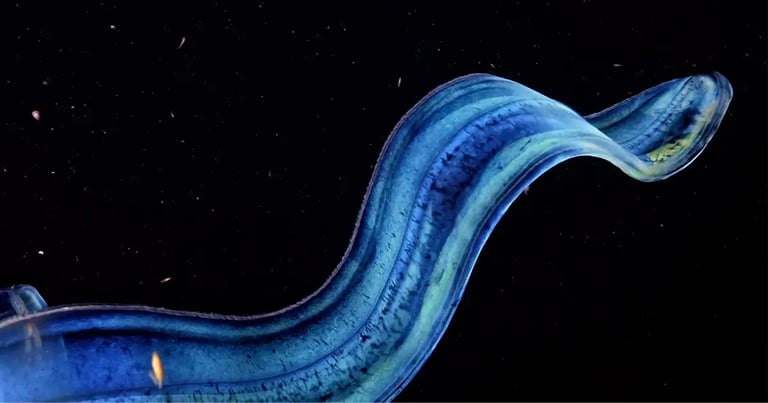

Research with ctenophores helps explore fundamental questions about biology, including how nervous systems evolved, how species adapt to extreme environments, and where bioluminescence originated.
Ctenophores, or comb jellies, comprise about 200 species thriving in diverse marine habitats and may represent the earliest branching animal lineage, possibly predating sponges in the animal family tree.
These creatures possess muscles and a simple nervous system, challenging assumptions about the simplicity of early animals and offering clues about what the first animals might have looked like.
Recent evidence, including a Nature study on chromosome organization, points to ctenophores as the sister group to all other animals, though the finding remains a topic of scientific discussion.
Prominent researchers, such as Steven Haddock and Pawel Burkhardt, highlight the significance of ctenophores in evolutionary biology and neural evolution.
Researchers emphasize that studying seemingly strange organisms like ctenophores can reveal basic biological principles relevant across life, including humans.
The exploration of ctenophores underscores their beauty and scientific value as gateways to understanding early animal life, nervous systems, and bioluminescence.
Some comb jelly species display unusual development, including reversible transitions between adult and larval stages, and possess unique lipids that help them endure deep-sea pressure.
Summary based on 1 source
Get a daily email with more Science stories
Source
Quanta Magazine • Sep 16, 2026
Ctenophores Aren’t Just Beautiful. They’re Biological Wonders. | Quanta Magazine