New DNA Markers Boost Lodging Resistance in Rapeseed, Enhancing Crop Resilience and Yield
September 16, 2026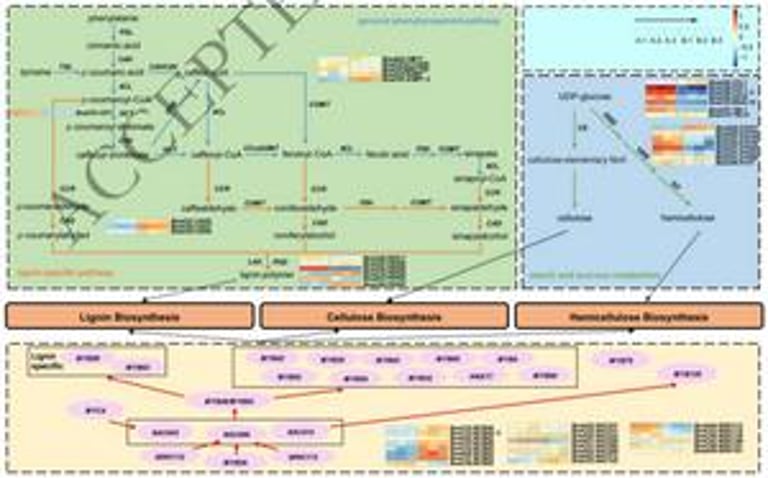

A new study identifies genetic and molecular factors governing stem lignocellulose content in Brassica napus to enhance lodging resistance in rapeseed.
Two simple DNA markers, ASMT.F1/R and ASMT.F2/R, were developed to rapidly distinguish hap01 from other variants, enabling efficient marker-assisted selection.
Funding came from national and regional Chinese programs, and the work is published in Horticulture Research.
Natural-population haplotype analysis of BnaC03.ASMT identified two major variants; the hap01 variant correlates with higher stem hemicellulose content.
Breeders can use these markers to pyramid favorable alleles and develop lodging-resistant cultivars without sacrificing yield, as lignocellulose content showed positive correlations with several yield-related traits.
Among these, 52 high-confidence regulators were highlighted, including transcription factors MYB85 and WRKY12, and a stem-specific gene BnaC03.ASMT whose product ASMT may be linked to lignocellulose synthesis.
Researchers used a double haploid rapeseed population across multiple environments to map 61 consensus QTLs associated with stem lignocellulose, and integrated this with transcriptomic analyses to pinpoint 1,035 candidate genes.
The study emphasizes practical breeding tools for improving stem strength and crop resilience amid climate-change challenges, with implications for sustainable rapeseed production.
Summary based on 1 source
Get a daily email with more Science stories
Source
EurekAlert! • Sep 16, 2026
Tackling crop lodging: new study unlocks genetic keys to stronger rapeseed stems