Lab-Grown Human Brain Tissue in Mice Sparks Ethical Debate, Shows Memory Improvements
September 16, 2026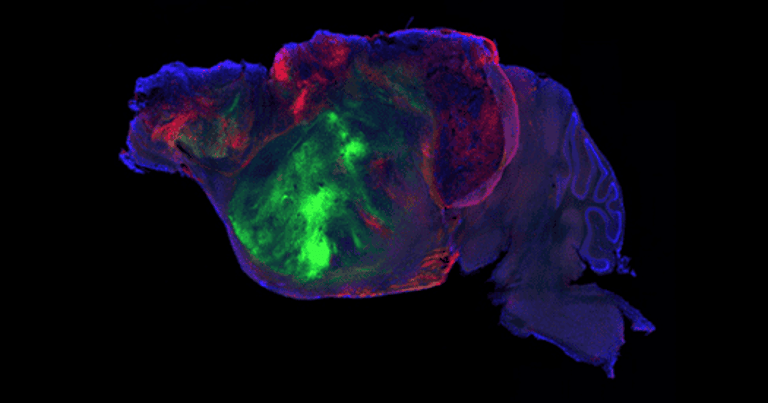


There is recognition of the experiment’s exploratory nature and ongoing debates about implications for neuroscience and ethics.
A Nature study shows human brain organoids transplanted into mice can integrate with the mouse brain and form functional neural circuits, offering a new model to study human brain development and neurological diseases.
Ethical questions arise about consciousness, animal rights, and where to draw the line, with safeguards noted to halt work before any markers of consciousness could emerge.
Behavioral tests indicate mice with humanized cortex outperform cortex-free mice on some tasks but do not reach the performance of normal mice in memory or motor coordination.
Experts stress the technology’s promise while calling for ongoing ethical oversight and broader societal input as the field advances.
The coverage invites listeners to subscribe to Nature Briefing and related podcasts, with a DOI provided for the article.
The 2026 Innovators Under 35 list spotlights nine climate-tech pioneers working on materials, cleaner industry, energy efficiency, pollution tracking, AI-driven energy savings, and waste-to-materials innovations.
The must-reads roundup covers AI safeguards, governance rules, model misbehavior reporting, grid-cost shifts to data centers, AI forecasting advances, ad data sharing rulings, US-China AI investment splits, pharma partnerships for drug discovery, AI-enabled scams, brain maps linked to Alzheimer’s, and faster methods to decode ancient scrolls.
A prominent external expert remains cautiously skeptical, suggesting the technique may not replace traditional animal models or yield major cognitive insights, and raising ethical concerns.
Limitations include a small sample size, no clear cognitive enhancement, and the approach not yet ready for therapeutic testing or long-term predictions beyond three months.
A quote emphasizes that AI does not have rights or consciousness and should not be trained to act as if it does.
Experts view the model as potentially valuable for psychiatric and developmental disorder research and precision medicine, while noting uncertainties about human-like processing and long-term implications of chimeras.
Summary based on 39 sources
Get a daily email with more World News stories
Sources
Ars Technica • Sep 16, 2026
Researchers swap in human brain cells for a mouse's cortex
Yahoo News • Sep 16, 2026
Scientists transplant lab-grown human brain tissue into mice
Stanford University
Researchers create advanced model for studying brain development, disorders