New Model Suggests Little Red Dots Are Young, Overmassive Black Holes Formed in Early Universe
September 16, 2026

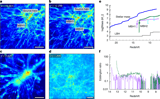
Simulations show that surrounding dense gas disks trap radiation, enabling black holes to accrete and grow much faster than in the present universe, reproducing the brightness and spectra of the Little Red Dots (LRDs).
The resulting black holes generate spectra that closely match the observed LRDs, explaining their quasarlike activity and primordial-star–like early-universe conditions in a single framework.
These rapidly growing black hole seeds align with JWST’s LRD observations, offering a plausible explanation for their brightness without invoking a new class of objects.
Webb’s infrared view complements Hubble’s optical data, helping reveal structures and stellar populations that would be harder to detect in a single wavelength.
The research is a collaborative effort involving institutions such as the University of Texas at Austin, the Max Planck Institute for Astronomy, IST Austria, and the University of Hawai‘i.
JWST captured the heart of M74, the Phantom Galaxy, about 32 million light-years away in Pisces.
Background context from EarthSky notes and ESA materials accompany the release, providing authorship context.
Panel 5 describes a gravitational lensing case where a blue foreground galaxy and a distant orange background galaxy create a magnified, warped image from bent light.
JWST produced a large, detailed panorama of the star-forming region IC 348, 1,000 light-years away in Perseus, highlighting young stars and brown dwarfs.
Spectral analysis in IC 348 uncovered a hydrocarbon feature in the atmospheres of the lowest-mass brown dwarfs, suggesting a possible new spectral class.
Astronomers identify a potential new spectral class of brown dwarfs, labeled class “H,” defined by the 3.4 μm hydrocarbon absorption feature.
Researchers plan to continue deep observations of a small sample and study the population to better understand their physics and prevalence.
Summary based on 23 sources
Get a daily email with more Science stories
Sources
Nature • Sep 16, 2026
Overmassive black holes and little red dots naturally form in simulations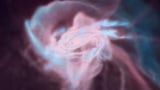
EurekAlert! • Sep 16, 2026
Japanese supercomputer explains Webb's Little Red Dots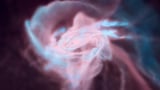
ScienceDaily • Sep 17, 2026
JWST’s mysterious little red dots may be black holes growing at incredible speeds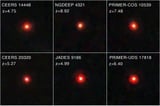
Universe Today • Sep 17, 2026
Little Red Dots Are The Seeds of Quasars and Supermassive Black Holes