Black Sea Port Disruptions Threaten Global Grain Markets, Triggering Supply Shocks and Price Surges
September 21, 2026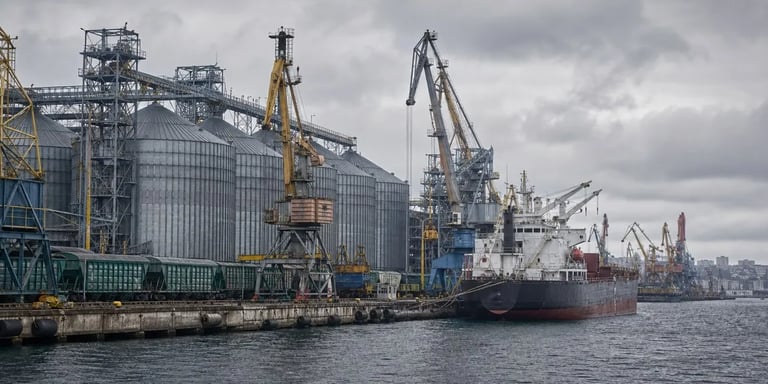

A global food-security warning is issued as ongoing conflicts disrupt grain shipments and fertiliser production, risking a growing crisis that will strain developing nations in the months ahead.
The crisis is framed as a four-part risk—food, fuel, fertilisers, and finance—driven by tensions in energy markets, grain exports, and global finance, with impacts amplified by the Ukraine conflict and the Iran‑Gulf crisis.
Asian processors are adjusting their sourcing for Q4 2026, turning to replacement suppliers and higher freight premiums as inventories tighten.
Bangladesh is advised to buy fertilisers earlier, diversify suppliers, protect productive gas for urea plants, promote diesel-free irrigation and solar pumps, monitor energy and food chains, and keep open-market sales with targeted aid.
India relies on imports for roughly 55–60% of its edible-oil consumption, highlighting vulnerability in domestic supply.
Alternative routes are mobilized (Bulgaria, Romania, France, Argentina, Australia, Baltic states, and others), but they cannot fully compensate for Black Sea capacity, often adding rail, handling, and fuel costs.
The 2022 Black Sea Grain Initiative is cited as proof that coordinated action can stabilize markets, support humanitarian needs, and restore confidence in maritime trade.
A concrete example shows a Hong Kong/Vietnam buyer scrambling for substitutes, illustrating procurement challenges posed by the Black Sea impasse.
India advocates for de-escalation, freedom of navigation, and diversified, resilient supply chains through multilateral forums to keep critical supplies flowing along major ocean routes.
Southeast Asian processors rely on Black Sea wheat for mills and feeds and face higher costs as replacement cargoes from Australia, North America, and Europe come at elevated prices.
Maritime risk in the Black Sea is rising, with insurers expanding high-risk coverage and Russia repurposing ports for grain exports as an alternative.
El Niño is strengthening, with implications for rainfall and agriculture, including a below-normal monsoon in India.
Summary based on 22 sources
Get a daily email with more World News stories
Sources

UA.NEWS • Sep 21, 2026
Disruption of Black Sea ports threatens food market — The Japan Times
The Japan Times • Sep 21, 2026
The other Hormuz: Black Sea blockade threatens a food supply shock
Urban Acres • Sep 21, 2026
Black Sea Wheat Crisis Threatens Global Food Supply
RetailNews Asia • Sep 21, 2026
Black Sea Wheat Shipments Drop 50 Percent as Port Strikes Hit Asian Millers