Twistronics Breakthroughs: New Quantum States Beyond Graphene with Exotic Superconductivity Potential
September 21, 2026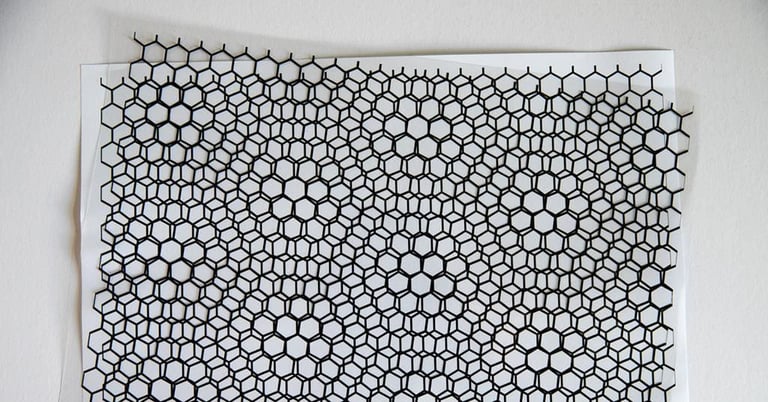

Moiré superlattices from slight layer misalignment create flat electronic bands that boost electron interactions, enabling novel quantum phenomena at certain twist angles such as the 1.1-degree magic angle in bilayer graphene.
Candidates span hexagonal, square, rectangular, and oblique lattices, enabling simulations of Hubbard-like physics and other quantum phenomena through twisting.
Researchers are testing halide perovskites, transition metal dichalcogenides, MXenes, and other materials to observe altered exciton transport and superconductivity, expanding twistronics beyond graphene.
Quantum twisting microscopes allow in situ twist-angle variation, enabling comprehensive phase diagrams of moiré materials and access to quantum states that previously required strong magnetic fields.
The work links computational catalogs to experimental pathways, with selected materials already grown and demonstrated to exfoliate to single layers for device fabrication.
A broad collaboration across more than a dozen institutions, led by theoretical and experimental teams, aims to turn electronic-structure catalogs into tangible twisted materials.
Small twists and different starting electronic structures can dramatically alter electron interactions, enabling new quantum simulators and states not accessible in existing platforms.
Two groundbreaking studies map the electronic structures of roughly 9,000 two-dimensional materials and identify over 1,600 twistable candidates, laying a foundation for designing new quantum matter.
Next steps involve assembling twisted bilayers from cataloged blocks, testing their collective behavior, and pursuing crystallization and device fabrication to explore predicted quantum states.
Many observed phenomena challenge existing theories, underscoring the need for new models to describe twisted moiré systems and their unconventional superconducting and topological states.
The field stresses interdisciplinary collaboration among chemistry, physics, and materials science, with rapid progress in surface functionalization, scalable fabrication, and exploration of macroscopic moiré patterns to tailor electronic properties.
The overarching aim is to move beyond current platforms by varying materials, layer combinations, and twist angles, guided by catalogs and subsequent experiments to explore a wide range of quantum matter.
Summary based on 2 sources
Get a daily email with more Science stories
Sources
Quantum Zeitgeist • Sep 21, 2026
Twisted Materials Unlock New Quantum States, Hinting At Superconductors