AstroForge Launches Ambitious Autonomous Asteroid-Mining Mission with AI-Driven Solo System
September 22, 2026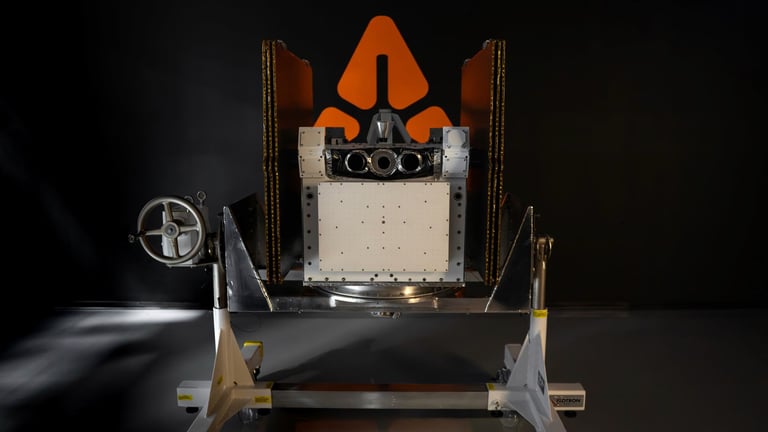


AstroForge is building a fleet-based, automated asteroid-mining architecture that coordinates multiple probes across the solar system to reduce dependence on human operators, with Solo serving as the onboard AI to control spacecraft.
The company is developing Solo, an autonomous onboard AI system designed to run spacecraft operations with minimal ground control intervention.
Solo will first fly in the DeepSpace-2 mission in shadow mode, processing data and making decisions without executing them, as a validation step before Autonomy-1.
On Autonomy-1, Solo will support the NASA heliophysics instrument COMPASS, enabling autonomous science activities during the mission.
AstroForge’s earlier missions include Brokkr-1 (2023) and Odin (launched in 2025), the latter experiencing communication issues and ultimately being lost.
Two prior prototypes failed to meet objectives, with Odin’s 2025 mission highlighting practical challenges in deep-space autonomy.
CEO and co-founder Matt Gialich frames autonomy as the holy grail of spacecraft engineering and advocates a careful, stepwise validation of Solo before full autonomy is deployed in mission-critical contexts.
Historically, spacecraft autonomy has relied on ground control due to neural-network concerns; the first neural-network–controlled satellite maneuver occurred only recently in 2024, underlining industry novelty.
The mission aims to be a groundbreaking demonstration of Earth-orbit autonomy, transmitting telemetry and science data to Earth while receiving no ground commands.
AstroForge plans to launch Autonomy-1 on Stoke Space’s Nova Pathfinder rocket in early 2027, marking the first mission to operate without any ground commands after separation.
This launch will also mark a milestone for Stoke Space as the first orbital flight of their fully reusable Nova Pathfinder rocket, a potentially transformative capability for spaceflight.
The company expects to fly its first autonomous spacecraft in 2027 with NASA backing, a mission to study the Sun.
Summary based on 2 sources