New Heat-Loving Eukaryote Discovered, Sets Record for High-Temperature Survival
September 22, 2026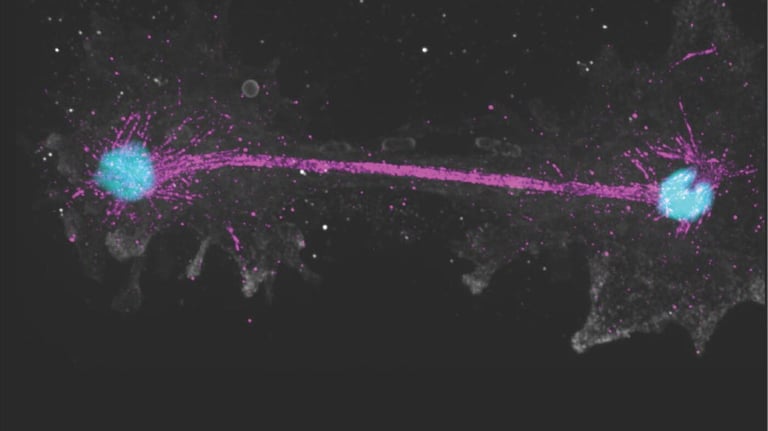

A NASA-supported study reports the discovery of Incendiamoeba cascadensis, a heat-loving eukaryotic organism from Lassen Volcanic National Park, California, setting a new upper temperature limit for known complex life.
Initial growth occurs around 57°C, with mitosis and replication at higher temperatures, and survival at extreme heat is achieved through shape changes and a protective outer layer.
The organism remains active up to about 64°C (147°F) and cannot grow above roughly 64°C, instead forming protective cysts beyond a critical threshold.
The findings were published in the journal Cell on September 22, 2026, with funding from NSF, NASA, NIH, HHMI, DOE and other agencies.
Led by Angela M. Oliverio and colleagues, the study analyzed samples collected from geothermal streams between 2023 and 2025 and reports the discovery in Cell.
Researchers highlight that extremophile biology has potential applications in biotechnology and medicine due to proteins uniquely adapted to extreme heat.
Proteins on the organism’s surface carry high positive charges, a common strategy for maintaining stability at high temperatures, paralleling approaches seen in other thermophiles.
Genome sequencing reveals an expanded genome with extra genes for protein maintenance and DNA repair, suggesting a distinct evolutionary path among extremophiles.
The fire amoeba displays two distinct body shapes and a larger genome, indicating a different evolutionary trajectory from genome-streamlined extremophiles.
The study informs astrobiology by illustrating how complex life could endure extreme heat and helps shape NASA’s strategies for assessing habitability beyond Earth.
Oliverio and collaborators emphasize the broader scientific importance of documenting heat-tolerant complex life as a step toward finding other life forms with extreme heat tolerance.
Related DNA sequences and RNA matches have been found in geothermal environments beyond Lassen, including locations like Yellowstone and New Zealand, suggesting wider distribution of heat-tolerant eukaryotes.
Summary based on 12 sources
Get a daily email with more Science stories
Sources
New Scientist • Sep 22, 2026
Fire amoeba breaks heat tolerance record for complex life
Science News • Sep 22, 2026
Meet the ‘fire amoeba,’ a record-breaking survivor of extreme heat