Microsoft's Open-Source AI Toolchain Boosts Robot Performance with Cloud GPU Offloading
September 23, 2026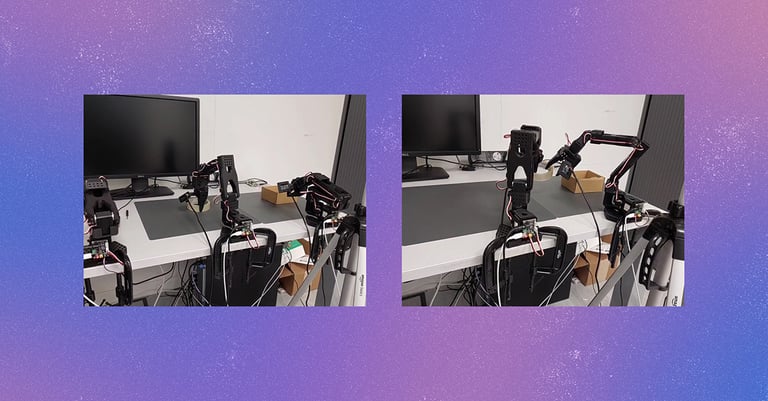

Emphasis on quality and data preparation through cleaning, labeling, and evaluating model accuracy, paired with ongoing performance monitoring and long-term analytics.
Evaluations show onboard GPUs can bottleneck performance and accuracy, with mapping and planning slowed by up to 383% on smaller GPUs and navigation accuracy dropping; offloading offers a solution.
Field validation remains essential due to real-world differences in lighting, friction, and joint forces, with additional training potentially required after deployment.
Demonstrations feature offloading inference from Microsoft’s Rho model used by dual-arm robots to a Jetson Thor GPU, enabling real-time control of the Mobile Aloha robot in real-world interactions.
The Forward Deployed Engineering group champions platform transition with a develop-once, scale-to-many mindset and a commitment to continuous improvement.
The platform collects real-world data, augments it with simulations, deploys models across devices, and uses field feedback to continually improve models.
A new Physical AI Toolchain enables containerized, Kubernetes-based deployment of robotics AI workloads across robot, edge, and cloud, facilitating distributed inference.
An automatic offload toolset within the Physical AI Toolchain integrates with Kubernetes, LeRobot simulators, and ROS2 to distribute workloads between robot, edge, and cloud.
Deployment history, model and version control, and rollback capabilities are highlighted to manage multi-robot, multi-site deployments.
Offloading neural network inference from onboard robot GPUs to edge or cloud GPUs can significantly boost performance, energy efficiency, and scalability in mobile manipulation tasks.
Medical and hospital-operations applications are discussed, including delivery robots in Japanese hospitals and Taiwan deployments tailored to local workflows.
Rigorous tests on representative robotic workloads show offloading increases task success, enables larger AI models, and improves responsiveness in dynamic real-world environments.
Summary based on 2 sources