Saudi Strategic Expansion in Afghanistan: Economic-Security Hub Near Iran Fuels Regional Power Struggle
September 23, 2026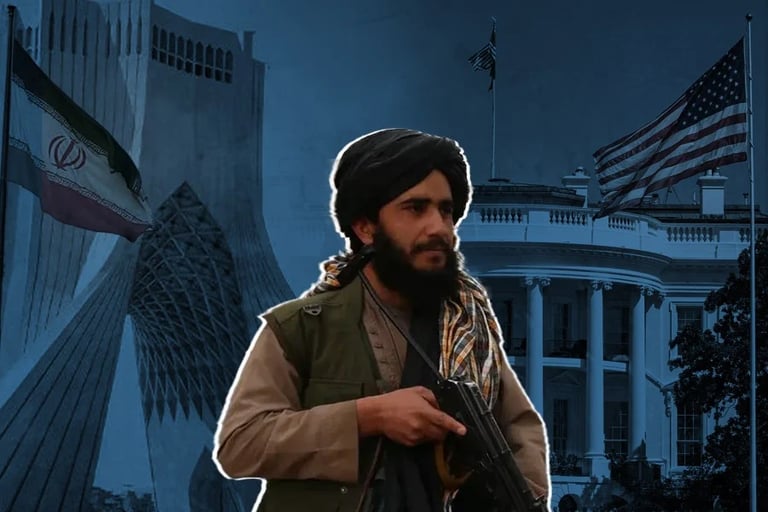

Saudi involvement in western Afghanistan could evolve from economic investment to security and intelligence networks, expanding its strategic footprint near Iran, with the Delta Oil contract brokered by Zalmay Khalilzad signaling more than money and aiming to create an economic-security ring that reaches into western Afghanistan.
The arrangement around the Taliban, including the Delta Oil deal, is intended to extend influence into Afghanistan as part of a broader push near Iran rather than solely commercial interests.
Humanitarian aid flowing into Afghanistan—roughly forty million dollars weekly—is viewed as a geopolitical tool that sustains Taliban stability while allowing the U.S. to maintain influence without a troop presence.
Analysts frame Afghanistan as a geopolitical chessboard where oil, transit routes, and influence pipelines shape power dynamics, with the Taliban positioned as a key instrument for multiple powers pursuing broader regional objectives.
A new regional power struggle places the U.S., Iran, Saudi Arabia, and regional actors at the center, while internal anti-Taliban fronts like the NRF, Freedom Front, Republic Front, and United Front intensify guerrilla activity.
The Taliban are viewed as a potential 'silent pawn' for the U.S. and West, enabling indirect regional objectives without direct military engagement.
Iran seeks to counter these developments by strengthening its networks and deterrence to prevent a hostile eastern encirclement, signaling a broader struggle for influence spanning Afghanistan and beyond.
Two parallel games are unfolding: one to push a Western-aligned economic-security ring around Iran via Afghanistan, and another to bolster Iran’s eastern defenses, with Pakistan's position remaining influential yet complex.
Iran is expanding its security depth, including a Fatemiyoun Brigade presence in Sistan-Baluchestan, while the Taliban suppress Iranian-linked institutions, indicating a recalibration of Tehran-Taliban ties amid shifting regional dynamics.
Economics, energy routes, and security networks are pivotal tools in this strategic competition, potentially turning Afghanistan into a central pressure point against Iran and a fulcrum for broader regional rivalries.
The Doha Agreement is viewed less as a straightforward war-ending pact and more as a framework enabling Taliban domestic power consolidation while preserving U.S. influence indirectly through funding flows and non-military leverage.
Summary based on 1 source
Get a daily email with more World News stories
Source

Hasht-e Subh • Sep 23, 2026
Afghanistan: A New Battlefield as Iran and America Redraw the Taliban’s Role in Regional Power