Global Study Links Human Activity to Emerging Infectious Disease Outbreaks: Calls for One Health Approach
September 23, 2026

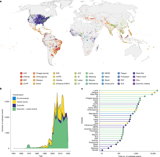
A large international study published in Nature analyzes tens of thousands of outbreak events across 169 countries to understand how human activity and environmental factors shape where emerging infectious diseases occur.
The analysis links zoonotic and vector-borne disease emergence to human-driven environmental changes and to detection and reporting biases, based on data from 1900–2022 with emphasis after 2000.
Across more than 50,000 outbreak instances involving 32 diseases in over 160 countries, the study identifies factors driving wildlife-to-human disease spillovers.
Policy implications call for protecting forests, regulating wildlife trade, and expanding healthcare access as part of pandemic prevention strategies.
The researchers acknowledge limitations including data sparsity, misalignment between infection events and environmental covariates, and residual biases that complicate separating true risk from reporting artifacts.
Validated associations show biodiversity intactness lowers Lyme disease risk, long-term drying increases dengue risk, high poultry density links to avian influenza A/H5N1 risk, and forest loss relates to mpox and zoonotic malaria, with surveillance quality boosting reliability.
Drivers differ by transmission mode: vector-borne zoonoses align with ecosystem and climate drying, while directly transmitted pathogens show more variable responses; urbanization and fragmentation emerge as cross-cutting factors with disease-specific patterns.
Access to healthcare dramatically affects outbreak reporting, with each hour to reach care reducing detection likelihood by about one-third.
Proximity to healthcare is a crucial factor in detection, underscoring health access as central to outbreak control.
The findings support One Health approaches—integrated surveillance and interventions across human, animal, and environmental health—with tailored strategies by disease and region.
Initial hotspots are influenced by detection biases toward urban centers and healthcare proximity, but after adjustment, risk remains higher with forest cover, landscape fragmentation, and livestock density, with regional variation.
Deforestation and wildlife exposure matter for certain diseases, but there is cautioned risk in assuming a single environmental cause explains all pandemics.
Summary based on 3 sources