New Trials and Biomarkers Revolutionize Merkel Cell Carcinoma Care: Expert Insights on Future Directions
September 3, 2026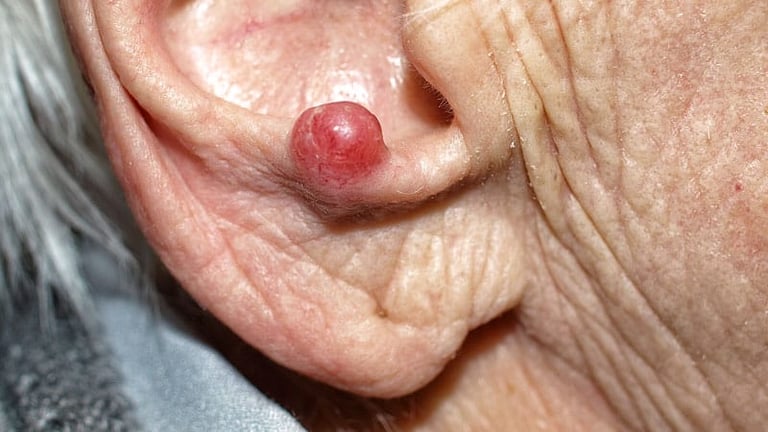

Two major multicenter trials are shaping MCC care: TOMMORRoW explores de-escalation for molecularly negative patients using retifanlimab versus observation, while MATRiX-2 tests a combination of low-dose radiation, immunotherapy, and an ATR inhibitor for immunotherapy-refractory MCC.
An expert interview with a leading MCC dermatologist discusses current research, advances, and future directions in MCC care, highlighting practical implications for clinicians.
Geographic differences in MCC etiology are evident: roughly 80% virus-related in the US, about 20% UV-related, with Australia seeing more UV-driven cases and Japan/Korea showing higher virus-associated MCC due to lower UV exposure.
Early MCC identification remains challenging; biopsy is advised for new, asymptomatic, rapidly growing lesions on sun-exposed skin, especially in older or immunosuppressed patients, with multidisciplinary care balancing surgery, radiation, and systemic therapy.
The Merkel Cell Recurrence Risk Calculator uses stage, age, sex, immune status, tumor site, primary tumor presence, and time since diagnosis to tailor surveillance and reduce imaging after 4–5 years disease-free.
Immunotherapy has dramatically improved MCC outcomes with agents like retifanlimab, avelumab, and pembrolizumab, contributing to a notable rise in 2-year relative survival for metastatic MCC from 23% to 54% between 2010–2012 and 2019–2021.
Two promising biomarkers offer highly accurate blood-based detection of early recurrence, potentially reducing need for surveillance imaging and steering management toward biomarker-driven strategies.
Beyond current approvals, trials are exploring targets such as DLL3 and vaccine-based approaches, signaling a broad and evolving pipeline for MCC therapy.
Emphasis is placed on early multidisciplinary input and biomarker-driven surveillance, supported by ongoing funding and trials that will shape future MCC practice.
A study by Emily Huynh indicates that reducing postoperative radiation after narrow-margin excisions in stage I–II MCC maintains excellent local control while lowering treatment burden and toxicity, suggesting possible de-escalation in selected cases.
Resistance to immunotherapy remains the biggest challenge, with many patients not responding initially or eventually developing resistance, prompting ongoing trials and new strategic approaches.
Summary based on 1 source
Get a daily email with more Science stories
Source
Medscape • Sep 3, 2026
Merkel Cell Carcinoma: Current Findings and Advances: A Q&A With Paul Nghiem, MD, PhD