Nscale and Figure Forge $3.5 Billion Partnership to Propel Humanoid Robot Development with 100,000 Nvidia GPUs
September 3, 2026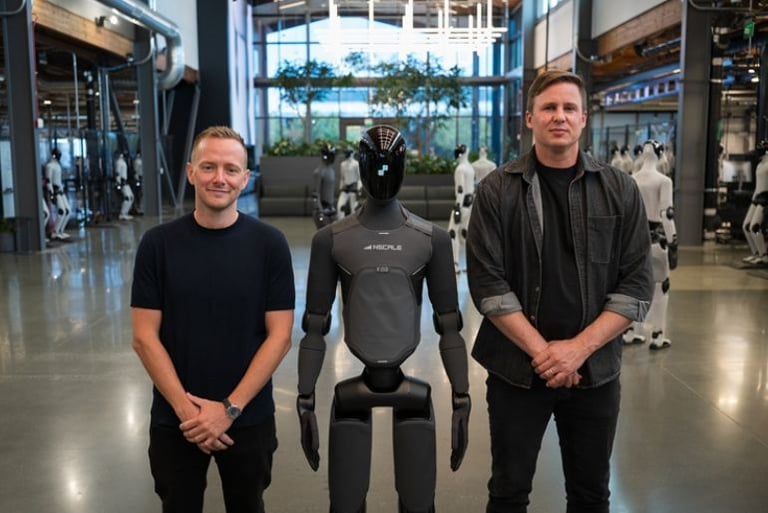

Nscale signs a multi-year partnership with Figure to deploy up to 100,000 Nvidia GPUs, anchored by a $3.5 billion compute commitment to propel Figure’s next generation of humanoid robots.
The collaboration emphasizes a vertically integrated model where Nscale provides power, compute, and orchestration while leveraging NVIDIA infrastructure to optimize model training and deployment.
Together, they aim to push physical AI by expanding data and compute for Figure’s Helix, with validation using Nvidia Vera Rubin GPUs and Nvidia Isaac Sim.
Figure builds its Index dataset from diverse real-world activities, filtering vast user-contributed video data to train broader robotic capabilities.
Humanoid robotics funding is surging in 2026, with about $8.6 billion raised year-to-date, nearly double all of 2025, signaling strong market momentum.
Industry expectations suggest robots could help offset labor shortages by 2035, though profitability and payoff timing remain uncertain.
Figure’s revenue plan centers on converting extensive training and data into scalable, billable robot deployments beyond demos.
Figure specializes in autonomous general-purpose humanoid robots for industrial and home use, headquartered in San Jose, California.
A core challenge for Figure is scaling physical intelligence, requiring massive compute and data to enable real-world perception, understanding, and interaction.
Figure’s Helix AI model integrates perception, reasoning, and motor control, demanding high-throughput compute for real-world robotics deployment.
Figure has historically raised large rounds with high valuations and is expanding beyond software into physical intelligence and robotics.
Figure has paid contributors around $15 million to date and plans to substantially increase spend on data and compute to move robots toward reliable, general-purpose work.
Summary based on 12 sources
Get a daily email with more AI stories
Sources

Interesting Engineering • Sep 4, 2026
US robotics firm secures 100,000 GPUs to train next generation of humanoid robots
AiThority • Sep 3, 2026
Nscale and Figure Sign Strategic Partnership to Power the Next Generation of Physical AI
Tech Funding News • Sep 4, 2026
Nscale backs Figure with $3.5B AI cloud deal as humanoid robotics race accelerates
Cision PR Newswire • Sep 3, 2026
Nscale and Figure Sign Strategic Partnership to Power the Next Generation of Physical AI