Urgent Call for Antarctic Drilling to Prevent Catastrophic Sea-Level Rise
September 30, 2026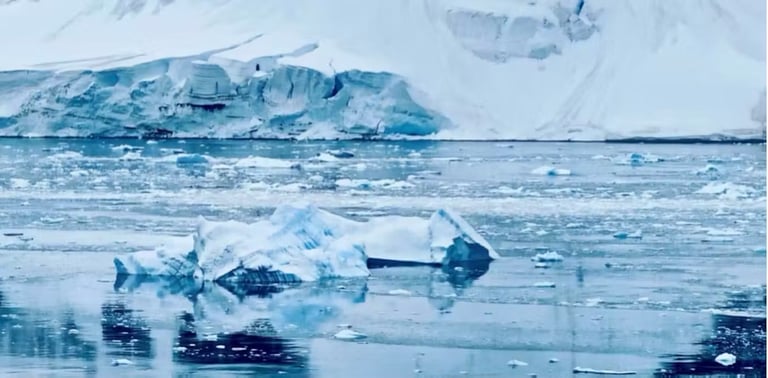


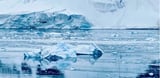
Antarctica’s Wilkes Subglacial Basin, a largely unexplored region, holds enough ice that its destabilization could raise global sea levels by as much as four meters, making urgent study essential.
Past warmer periods saw retreat in this basin, and its bed lies well below sea level, rendering it particularly vulnerable to ocean-driven melting and potential rapid change.
Across East Antarctica, the total ice sheet could, in principle, contribute over 50 meters to sea-level rise, underscoring the high stakes of understanding basal conditions and ocean forcing in Wilkes Basin.
Foundational work on grounding-line behavior, satellite-era mass balance observations, and future mass-loss projections under different climate scenarios frame the current research.
Current models miss key processes like ice cracking and subglacial hydrology; the proposed approach accelerates scenario exploration but is not a final forecast.
Observational gaps and limited knowledge of near-Cook Glacier ocean conditions hinder confident predictions of rates and thresholds for large-scale retreat.
The effort aligns with Australia’s Decadal Strategy (2025–2035) and involves ACEAS, AAPP, and SAEF, backed by multiple national and international institutions.
Professor Bertler is a co-author, highlighting potential conflicts of interest within the study.
New Zealand scientists and colleagues summarize current knowledge and highlight gaps that impede understanding of triggers for extensive melt.
To reduce uncertainty, scientists propose a large international drilling campaign—multiple icebreakers and boreholes over five to ten years—urging action well before 2032.
The bibliography spans Antarctic sea-ice dynamics and Southern Ocean ecosystem responses, indicating interdisciplinary implications of ice-sheet change.
Achieving early-warning detection will require sustained international political buy-in and on-site presence due to harsh conditions and weather in the region.
Summary based on 7 sources
Get a daily email with more World News stories
Sources
Science Media Centre • Sep 29, 2026
Antarctica’s unexplored threat – Expert Reaction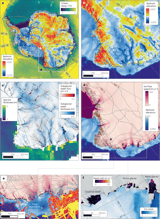
Nature • Sep 30, 2026
Dynamic instability of the Wilkes Subglacial Basin Ice Sheet, East Antarctica
Antarctica's unexplored threat • Sep 29, 2026
NEWS BRIEFING: What we don't know might hurt us - Antarctica's unexplored threat