Cancer Drug CADD522 Shows Promise in Strengthening Bones, Cutting Fat in Post-Menopausal Mice Study
September 7, 2026

A study from the University of East Anglia shows CADD522, initially developed to target cancer, may strengthen bones and curb fat gain in post-menopausal mice, signaling potential for osteoporosis and menopause-related metabolic health.
If human trials confirm efficacy, CADD522 could benefit postmenopausal women with osteoporosis, those approaching menopause, or individuals seeking to prevent bone loss, though development should proceed with cautious, stepwise trials.
The study finds RUNX2 inhibition by CADD522 protects against ovariectomy-induced bone loss and improves systemic metabolic homeostasis, highlighting RUNX2 as a tractable regulator of skeletal and metabolic health in adulthood.
Pharmacokinetic data show oral bioavailability with rapid clearance in rodents and greater stability in higher species, along with tolerability at high doses in preclinical models.
Omega-3 fats like DHA stay largely unaffected, while other lipid abnormalities shift toward healthier patterns, suggesting overall improvements in lipid metabolism.
Limitations include reliance on a single OVX model, small lipidomic sample size, need for mechanistic and long-term fracture studies, and optimization of exposure and delivery strategies.
The research was led by Dr. Darrell Green of UEA’s Norwich Medical School, with collaborators from the University of Maryland, Scintillon Research Institute, and the University of Stirling, published in npj Drug Discovery (Ersek et al., 2026).
Researchers observed altered fat metabolism extending to brain tissue, with favorable fatty acid profiles like stable omega-3 levels, though caution is advised before extrapolating to humans.
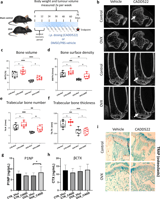
In OVX mice treated with CADD522, the bone formation marker P1NP rose while the resorption marker beta-CTX stayed unchanged, indicating a net anabolic effect and balanced remodeling.
CETSA showed dose-dependent RUNX2 engagement by CADD522 (EC50 about 116 nM); SAR studies identified a bulky electron-withdrawing group at carbon-4 as essential for activity.
Experts emphasize these findings are preliminary and animal-based; further work is needed on safety, dosing, human effectiveness, and preventive use before bone loss begins could be explored.
In vitro spheroid assays demonstrate CADD522 and active analogues selectively inhibit RUNX2-expressing cells, supporting target specificity.
Summary based on 4 sources
Get a daily email with more Science stories
Sources
News-Medical • Sep 7, 2026
Experimental cancer drug could protect against osteoporosis and weight gain
Labmate Online • Sep 7, 2026
Repurposed cancer drug could reverse bone loss, weight gain post-menopause