Cortical Involvement in MS: New Insights into Early Pathology and Treatment Strategies
September 8, 2026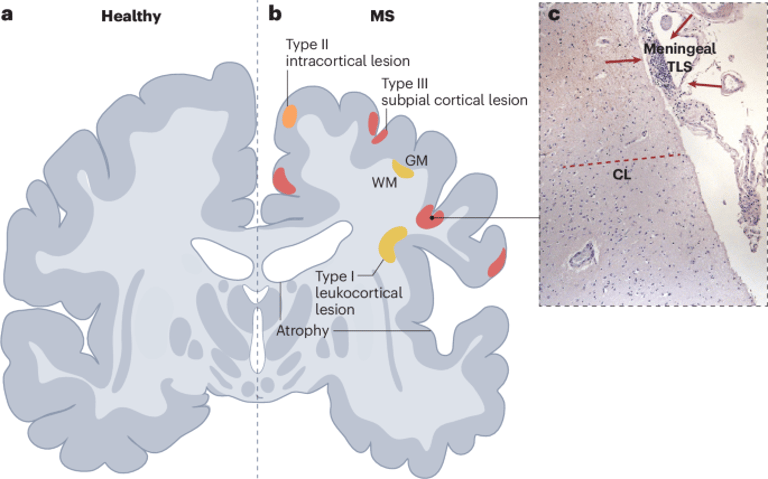

The story begins by establishing that foundational pathology in MS includes cortical lesions and transected neurites, proving cortical involvement and its inflammatory profile from early studies.
Emerging immunology points to B-cell–driven mechanisms and lymphotoxin signaling as contributors to cortical damage, with implications for targeted therapies.
Long-term data show that cortical involvement at diagnosis predicts cognitive impairment and shapes the overall disease trajectory, underscoring cortical pathology as a determinant of progression.
Advances in imaging, including 7T MRI and double inversion recovery sequences, have dramatically improved the detection of cortical lesions with higher sensitivity.
Pediatric and paediatric-onset MS studies reveal gradients of thalamic and cortical damage, offering insight into early disease mechanisms and pathology.
Over 25 years, the field has shifted from underestimating cortical lesions to recognizing grey matter involvement as integral to MS.
Recent breakthroughs identify early neurodegenerative pathways and potential biomarkers that could guide future therapies and progression monitoring.
Longitudinal studies link cortical lesion burden and subtypes to disability, alongside physical and cognitive outcomes and progression to the progressive phase.
Consensus scoring standards for cortical lesions using DIR MRI have been established to improve reproducibility across studies.
Across the literature, cortical involvement is presented as an early, pervasive, and clinically meaningful facet of MS that influences diagnosis, prognosis, and treatment strategies.
Early inflammatory cortical demyelination at MS onset shifts the view from late degeneration to early pathology in the cortex.
Connections between meningeal inflammation, B-cell activity, and severe cortical pathology suggest mechanisms linking meningeal immunity to cortical damage.
Summary based on 1 source