AI Robots Revolutionize Eldercare and Cancer Detection in China's Expanding Health Sector
March 21, 2026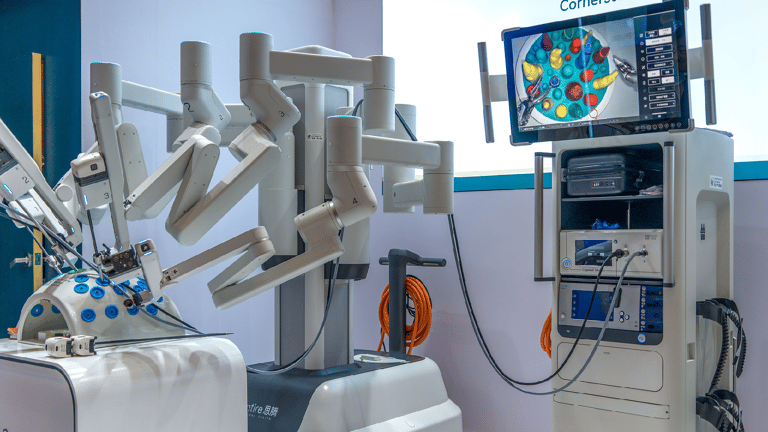

AI-enabled medical innovations like PANDA enable early detection of pancreatic cancer from non-contrast CT scans, flagging cancers within seconds and enabling screening across thousands of institutions for millions of people.
Eldercare is being transformed by AI-powered robots, like Xiao Xi in Hangzhou and other units in Chongqing, which monitor health, provide daily assistance, and offer emotional support, including local dialect communication and facial/emotion analytics.
PANDA, an AI diagnostic tool, helps identify cancers often invisible to the human eye by using multimodal data to improve sensitivity and specificity, broadening access to healthcare.
The health sector is expanding rapidly through artificial intelligence and smart healthcare to meet rising demand for medical care, elder services, and health management.
Policy measures are being introduced to support eldercare robotics by addressing high costs, limited functionality, and market access barriers, aiming to promote adoption and industry growth.
The 15th Five-Year Plan (2026-2030) is positioned to advance the Healthy China vision, with AI diagnostics and smart eldercare expected to play central roles in expanding access to high-quality health services.
Showcases of AI and robotics in Guangdong and healthcare AI deployments in Zhejiang and Hangzhou illustrate the ongoing integration of technology across healthcare sectors.
China’s aging population—over 300 million people aged 60 and above—drives demand for eldercare robots and new care models that blend robot assistance with professional care and family involvement.
Summary based on 2 sources
Get a daily email with more AI stories
Sources
CGTN • Mar 21, 2026
How technology is shaping a new era for a Healthy China
CGTN • Mar 21, 2026
How technology is shaping a new era for a Healthy China