Amazon to Automate 600,000 Jobs by 2033, Sparking Major Workforce Shift
November 4, 2025

Automation is being accelerated in shipping and delivery centers to rely more on machines for tasks traditionally done by humans.
Automation is about sustaining competitive service—faster delivery, broader product availability, and lower costs—in the face of rising expenses and competition from rivals.
Robots will replace repetitive and physically strenuous tasks, while new technical roles for repair and maintenance offer higher pay and clearer career paths, though total new technical roles may be smaller than the number of roles eliminated.
Analysts view the shift as cost-driven, with potential annual savings up to around $4 billion if automation substitutes human labor.
The trend extends beyond Amazon, as major retailers seek efficiency to meet expectations for speed, price, and selection, reshaping labor markets more broadly.
HAIC—Human-AI Collaboration—is presented as an inevitable workplace trend that will reshape strategy, process design, talent management, and motivation.
Automation is intended to assist workers and improve safety and efficiency, with projects like Blue Jay and Project Eluna aimed at faster, safer movement and reducing repetitive tasks.
CEO Andy Jassy signals that AI and automation will reduce the need for some corporate and operational roles, signaling a broader automation push across the company.
Amazon plans to replace more than 600,000 U.S. jobs with automation by 2033, aiming for 75% of operational processes automated and a net reduction of about 160,000 roles by 2027.
The rollout is designed to flatten the hiring curve, enabling growth with fewer workers overall, starting with highly automated facilities like a five-story warehouse in Shreveport featuring Sparrow robots and long conveyor networks.
AI is reframed as a trio of Human-AI collaboration modes—Human-Centric, AI-Centric, and Symbiotic—altering how workforces and processes are designed.
The broader question is what happens to workers whose roles are automated as technology becomes embedded in business operations.
Summary based on 3 sources
Get a daily email with more Tech stories
Sources

The New York Times • Nov 3, 2025
Amazon’s Robot Takeover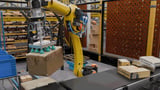
Unión Rayo EN • Nov 3, 2025
Goodbye to human employees—Amazon accelerates its robotic transformation and puts 600,000 jobs at risk