Intel and Elon Musk Team Up to Revolutionize AI Chip Production at Terafab Austin
April 18, 2026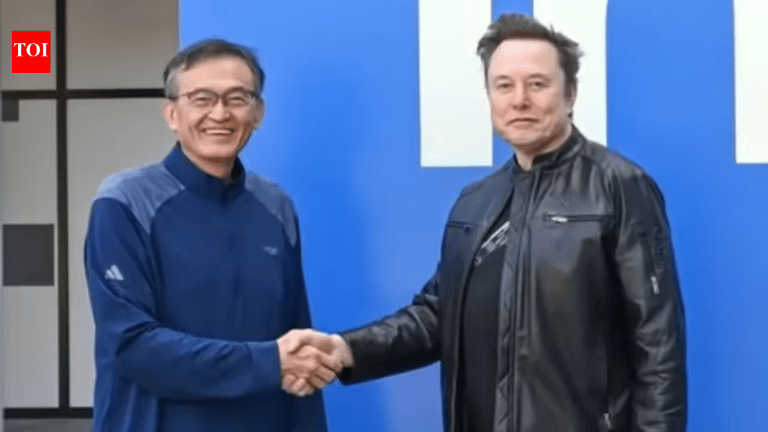

If successful, Terafab could democratize access to advanced AI chips for startups through faster iteration, reduced supply‑chain vulnerabilities, and tailored hardware for ML and automation.
Elon Musk’s Terafab plans an in‑house semiconductor fabrication facility at Tesla’s Austin site to accelerate AI chip production and reduce dependence on established foundries.
Executors and builders should watch closely for transparency and delivery on promises, as execution risk remains a key factor in sustaining the stock rally and realizing long‑term gains.
Intel has seen about a 51% stock surge over eight sessions, adding roughly $100 billion in market capitalization in under 10 days.
Overall, the initiative signals a bold challenge to traditional semiconductor leaders and could reshape AI chip development and production timelines, contingent on navigating technical, logistical, and partnership hurdles.
Early engagement with major equipment suppliers like Applied Materials, Tokyo Electron, and Lam Research aims to secure rapid tooling quotes, with Samsung and Intel also considered for expanded support.
The project could attract partnerships with smaller tech firms and spur regional innovation as Intel expands in‑house production capabilities.
Intel announces a strategic alliance with Elon Musk and his firms SpaceX, xAI, and Tesla to build advanced AI chips at Terafab in Austin, reshaping the chip race and signaling a bold push beyond traditional foundries.
The initiative is framed as refactoring silicon fab technology, with the collaboration viewed as mutually beneficial for pursuing shared goals in AI hardware and rapid fabrication.
Industry dynamics include possible expansion of Samsung’s Texas facility and Intel’s alignment with Terafab’s aggressive timelines, signaling high expectations with notable integration and supply‑chain challenges.
The project faces technical and timeline risks due to chip manufacturing’s complexity, reliance on early supplier quotes without full blueprints, and the need to balance speed with precision in a mature foundry‑dominated market.
The partnership marks a strategic rebirth for Intel under CEO Lip‑Bu Tan, driven by the stock surge and a shift toward high‑performance silicon and AI infrastructure.
Summary based on 3 sources
Get a daily email with more Tech stories
Sources
The Times Of India • Apr 18, 2026
Intel gives employees an update on Elon Musk; says: Will disclose more broadly the scope and nature of …
OpenTools • Apr 17, 2026
Elon Musk's Terafab Project: Tesla, SpaceX Aim for In-House AI Chip Production
OpenTools • Apr 18, 2026
Intel Announces Strategic Alliance with Elon Musk for Terafab Chip Factories