Ukraine Leads Drone Warfare Revolution with AI-Controlled Swarm Tech Amidst Western IP Hurdles
May 18, 2026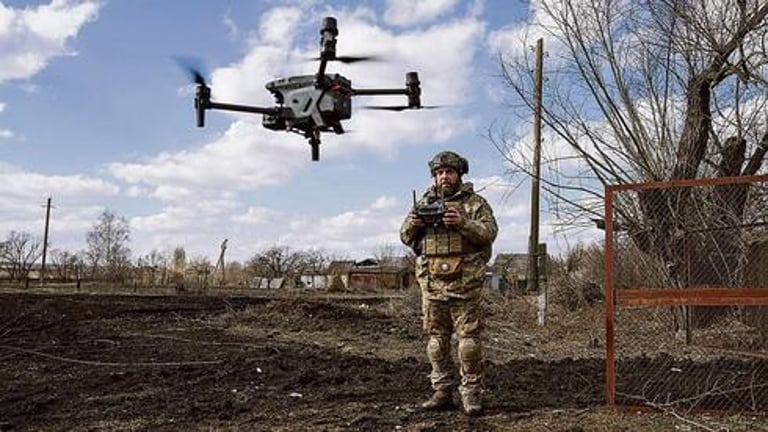

The piece warns that protecting intellectual monopolies could hinder the future effectiveness of Western militaries in unmanned warfare.
Israel serves as a middle-ground model with modular, upgradable autonomous ground robots from companies such as Elbit, enabling rapid field adaptations while upholding military standards.
Ukraine is pursuing drone swarms as a central element of its military tech agenda, aiming for AI-controlled, autonomously coordinated drone attacks four years into the Russian invasion.
Ukraine positions itself as a world leader in drone warfare, with strong defense industry and military expert interest in developing swarm capabilities.
Western militaries face barriers like right to repair constraints and IP protections that slow adaptation and limit field modifications by soldiers.
This shift is part of a broader move to a new revolution in military affairs where software-defined, AI-based systems are updated rapidly to favor precise, inexpensive mass over traditional hardware power.
Ukraine emphasizes rapid field adaptation and independent repair capabilities, enabled by frontline operators who maintain repair labs and modify software and hardware in real time.
Ukrainian commander Mykola Zinkevych outlines current and near-term capabilities for ground robotic systems, including cargo delivery, casualty evacuation, reconnaissance, fortification siege, behind-enemy-lines sabotage, and minefield laying.
Longer-term goals include deploying thousands of unmanned ground vehicles, with a March 2026 plan envisioning 25,000 UGVs contracted in the first half of 2026 to support front-line operations.
China pursues a rapid, scalable drone-centric approach with the Atlas swarm system, deploying 96 drones in three seconds under one operator via decentralized mesh networks.
A Carnegie Endowment paper describes a broader shift toward affordable precise mass, rapid adaptation, and networked warfare, calling for new doctrines and organizational changes as technologies proliferate.
Ukraine’s experience highlights rapid, bottom-up adaptation and local production/repair for drones and robotics, contrasted with Western IP and maintenance-data controls that hinder on-the-spot maintenance.
Summary based on 3 sources
Get a daily email with more Tech stories
Sources

Techdirt • May 15, 2026
Why The US Can’t Adopt Ukraine’s Innovative Approach To Unmanned Warfare Systems
The Japan Times • May 16, 2026
Sci-fi or battlefield reality? Ukraine's bet on drone swarms.
ynetglobal • May 18, 2026
Ukraine is building a drone army that can defeat Russia