London Expands Controversial Facial Recognition and Drone Surveillance Across All Boroughs Amid Privacy Concerns
June 24, 2026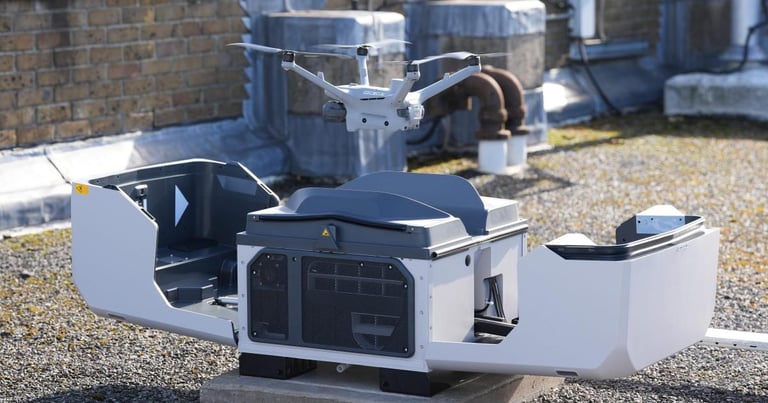


London is set for a tech-driven policing push as the Met expands live facial recognition and drone coverage to every borough, backed by a plan to scale artificial intelligence in operations.
Sir Mark Rowley argues that police technology budgets trail other public bodies, with roughly half the spending, and says progress should not be stalled by awaiting new legislation for every innovation.
Current drone operations run nine devices from three sites (Islington, the West End, Hyde Park), handling about 200 incidents a week after pilots began last year.
Civil liberties groups, led by Big Brother Watch, warn of privacy breaches, misidentifications and discrimination as surveillance expands.
During Croydon pilots there was one false alert and one misidentification; the misidentified person, a registered sex offender, later received a two-year sentence for violating a sexual harm order and possessing indecent images.
Each deployment uses a time-bound watchlist with over 470,000 screened and only one false alarm, leading to a brief stop-and-verify.
The piece notes racial bias concerns in facial recognition and cites a retrospective case where an unrelated individual was wrongly linked to a crime.
Human rights groups criticize expansion for mass surveillance and misidentification risks, while the High Court previously found safeguards adequate after a man challenged a false identification.
Operational details show facial scans generate a digital signature checked against a watchlist each night, with bystander images deleted immediately and strict handling to prevent lasting identification of innocents.
External oversight exists as Mayor Sadiq Khan blocked a £50 million Palantir contract, citing procurement and transparency concerns.
Static live facial recognition uses temporarily mounted cameras with feeds monitored remotely; Croydon pilots used watchlists created up to 24 hours in advance and deleted afterward, resulting in 173 arrests from about 470,000 pedestrians monitored.
The Met already cross-checks passers-by biometrics against watchlists, and the UK stands alone in Europe for large-scale deployment of live facial recognition.
Summary based on 13 sources
Get a daily email with more World News stories
Sources
Downtown Radio • Jun 24, 2026
Met to announce ambitious plans to scale drones, LFR and AI in fight against criminals
FRANCE 24 • Jun 24, 2026
London police to extend use of live facial recognition, drones
Evening Standard • Jun 23, 2026
Police tech budgets ‘have fallen amid political focus on officer numbers’
Belfast Telegraph • Jun 23, 2026
Police tech budgets ‘have fallen amid political focus on officer numbers’