Tesla Expands Robotaxi Service to Miami, Eyes Nationwide Autonomous Ride-Hailing Growth
July 3, 2026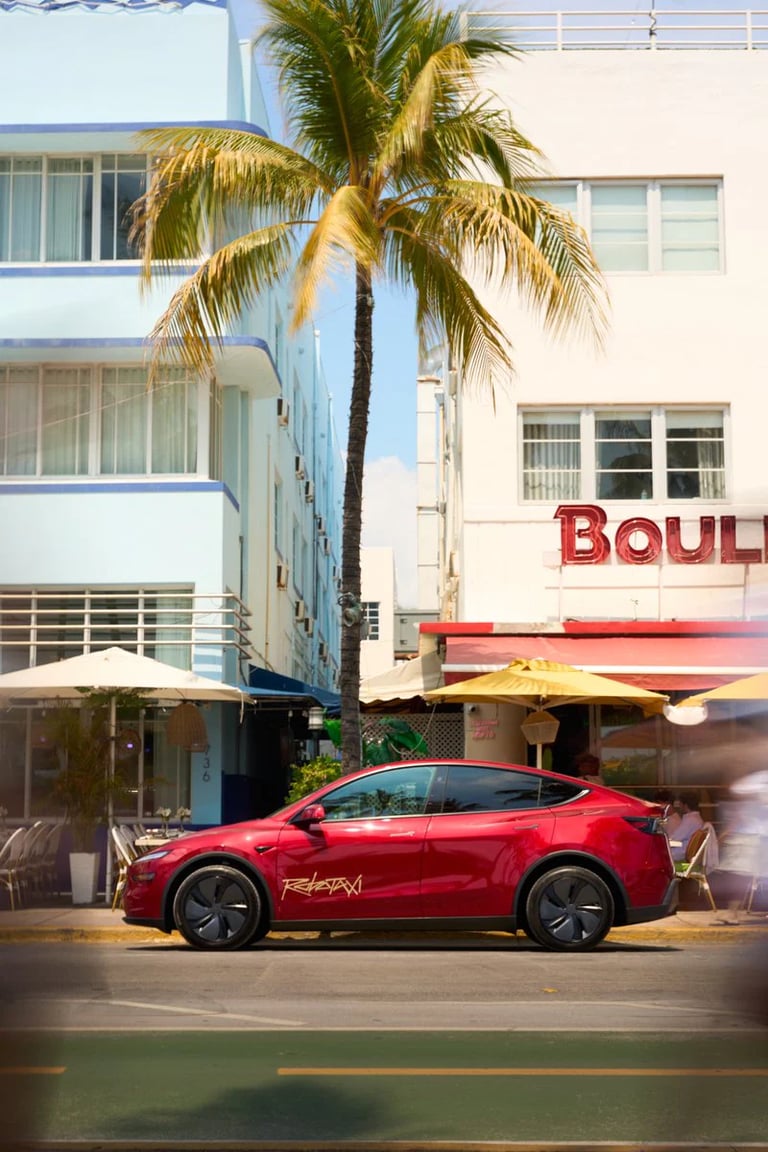


Industry players should invest in edge computing hardware to process data locally, reducing latency for real-time AI decision-making.
A key challenge remains unpredictable pedestrian behavior, which is being mitigated through continuous over‑the‑air learning from real-world rides to refine the model.
Insurance models may shift toward usage-based policies tied to AI performance, while strong cybersecurity remains essential to protect autonomous decision systems.
Economically, AI-driven automation could lower ride-hailing costs and boost margins, with monetization coming from dynamic pricing, fleet optimization, and potential partnerships or in-house autonomous stacks amid privacy and ethics considerations.
Early operations show mature perception systems able to handle adverse weather, signaling faster potential deployment in urban markets.
Best practices call for ethical AI audits and close regulator collaboration to sustain growth in autonomous mobility.
Scaling requires municipal partnerships to establish compliant pickup zones and framework agreements ensuring safe expansion of unsupervised robotaxi services.
Initial fleet size is modest, with plans for rapid expansion as the service scales.
Tesla emphasizes vertical integration of hardware and software as a differentiator, competing with Waymo and Cruise while exploring broader revenue streams like logistics and delivery using the same AI foundation.
Tesla has launched its robotaxi service in Miami, expanding its autonomous ride-hailing footprint beyond Austin where the service began last year.
CEO and founder envisions a future with fully self-driving cars without human safety monitors becoming more common across the United States later this year.
Miami rollout follows Austin’s transition from a safety-monitored phase to fully driverless operation, with Florida permitting unsupervised driving that meets federal standards after local emergency training was completed.
Summary based on 14 sources
Get a daily email with more Tech stories
Sources

The News International • Jul 3, 2026
Tesla launches 'Robotaxi' Service in Miami, expanding beyond Texas
Blockonomi • Jul 3, 2026
Tesla (TSLA) Stock Gains Ground Following Miami Robotaxi Service Launch