Tower Semiconductor's $3B Expansion in Japan Targets AI Demand, Faces Geopolitical Supply Challenges
July 14, 2026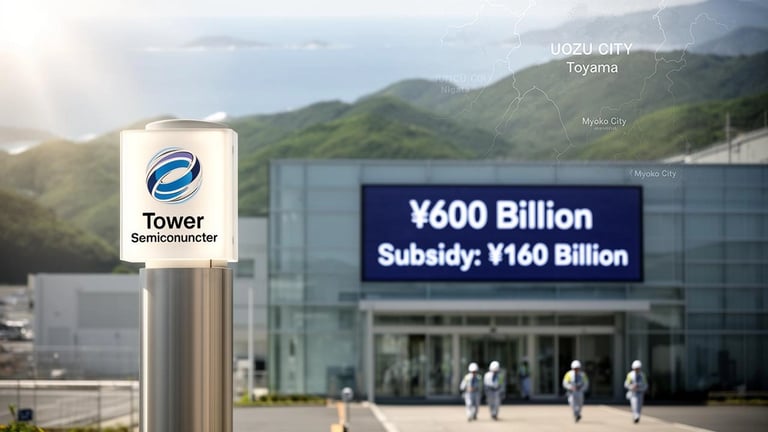


Tower Semiconductor announced a two-track expansion of its 300mm silicon photonics, silicon germanium, and advanced packaging capacity in Japan, backed by roughly US$3.0 billion in net investment and US$1.0 billion in government grants, with first new production expected by late 2027.
Phase one aims for full production readiness by the fourth quarter of 2027, expanding existing capacity at Arai and Fab 7 to meet rising AI and data-center connectivity demand.
The company updated its 2028 targets to US$3.6 billion in revenue and US$1.2 billion in net profit, signaling optimism tied to AI market demand.
Valuation context notes a current price/earnings ratio well above historical medians, suggesting the stock may be overvalued despite strong fundamentals.
Analysts indicate Tower is not among the top 10 stocks recommended by Stock Advisor, emphasizing the need to assess fit with a growth thesis.
There has been no insider buying or selling in the last 12 months, suggesting stable insider sentiment.
The article highlights a strong market cap around US$26.89 billion, a very low debt-to-equity ratio of 0.05, and a high Altman Z-score, signaling financial resilience.
Standard investment disclosures note caution about accuracy and financial advice in the article.
Forward-looking statements include risk disclosures about demand volatility, project execution, grant terms, regulatory issues, and macro factors that could affect outcomes.
Risks and uncertainties acknowledged include potential delays, grant terms, market demand fluctuations, regulatory requirements, and geopolitical factors affecting operations.
Technical outlook shows shares up more than 400% over the past year, trading above key moving averages with an RSI around 57, indicating momentum and room for upside.
Geopolitical and material supply considerations are noted, including China tightening indium phosphide controls, underscoring that capacity depends on access to essential materials for photonics.
Summary based on 24 sources
Get a daily email with more Tech stories
Sources
Yahoo! Finance • Jul 14, 2026
Tower Semiconductor to invest $3 billion in Japan, backed by government grants
The Next Web • Jul 14, 2026
Tower Semiconductor puts $3bn into Japan, and Tokyo is paying for a third of it
GlobeNewswire • Jul 14, 2026
Tower Semiconductor with METI Support Announces Strategic Capacity Expansion in Japan
Stocktwits • Jul 14, 2026
TSEM Stock Soars Premarket: Japan Backs Tower’s $3B AI Chip Manufacturing Push