Quantinuum and University of Chicago Achieve Breakthrough in Fault-Tolerant Quantum Computing with S3 Anyons
July 19, 2026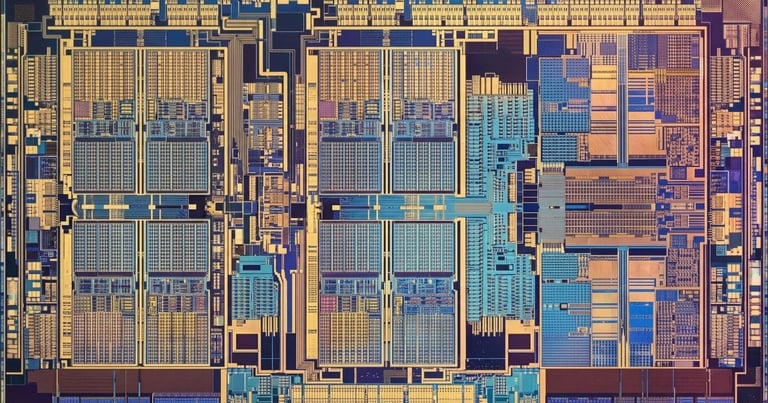


Quantinuum’s 54-qubit H2 processor showcases topological quantum computation by preparing a ground state capable of manipulating non-Abelian anyons, advancing beyond conventional qubit control.
S3 symmetry enables three-level qutrit information and a full operation set (braiding, moving, fusion measurements) to achieve universality on 54 qubits of Quantinuum’s H2 trapped-ion processor.
A joint effort by Quantinuum and the University of Chicago Pritzker School of Molecular Engineering demonstrates a universal gate set for non-Abelian anyons, encoding topological qutrits with braiding and fusion.
A key insight is that fusing anyons, alongside braiding, is necessary for universality in the S3 system, addressing a major limitation of braiding-only approaches.
This advance points to a scalable path toward fault-tolerant quantum computing by leveraging the intrinsic properties of topological quantum matter to manipulate information.
Published in Nature on July 15, 2026, the study entangles 54 qubits to realize a universal gate set through braiding and fusion, hinting at scalable quantum computation with reduced error correction.
All data are openly accessible on Zenodo, with the numerical simulation code available to foster transparency and collaboration in the quantum community.
Building on prior D4-symmetric work, the transition to S3 symmetry overcomes previous universality limits in non-Abelian anyon codes.
A collaboration demonstrates universal quantum gates by combining braiding and fusion of anyons in the S3 quantum double, the smallest non-Abelian group, signaling a path toward fault-tolerant quantum processing.
The approach could bypass the costly magic state distillation step by directly preparing magic states through topological operations, potentially reducing resource needs for fault-tolerant quantum computing.
The researchers present a proof-of-principle toward fault-tolerant, universal quantum computation with non-Abelian anyons, marking a practical move from theory toward hardware demonstrations.
The work shows the S3 topological order can be prepared at scale and supports a universal gate set, including a verified magic state for benchmarking quantum power.
Summary based on 2 sources
Get a daily email with more Tech stories
Sources

Quantum Zeitgeist • Jul 15, 2026
Quantinuum’s 54-Qubit Chip Braids & Fuses Anyons For Gates
Quantum Zeitgeist • Jul 19, 2026
Quantinuum & UChicago PME Demonstrate Universal Quantum Gates Using Anyons