Intel's Leadership Shift: Gelsinger Champions Tech-Led Strategy Amid Global Chip Battle
July 20, 2026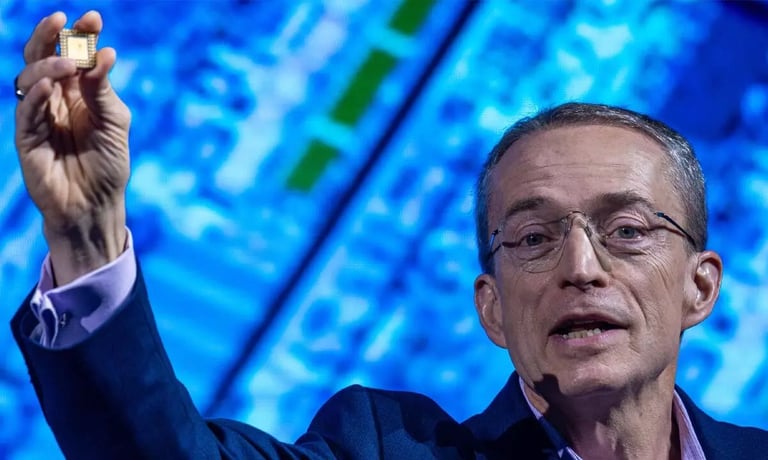

Intel faces stiff competition from TSMC, Samsung, AMD, and Nvidia, with Nvidia’s stakebuilding adding to intense market dynamics.
Intel’s decline, Pat Gelsinger argues, began years before his 2021 return, rooted in a shift away from deep technical leadership toward business-driven leadership, making him the first clearly technical leader in roughly 15 years.
The competitive backdrop shows rivals expanding their positions while Intel struggles to keep pace.
Gelsinger critiques pre-return capital allocation, noting roughly $79 billion returned to shareholders via dividends and buybacks from 2015–2020 and suggesting an extra $100 billion on the balance sheet could have altered outcomes.
He questions whether the company’s capital strategies before his tenure adequately supported long-term, technology-led growth.
The narrative links leadership choices and capital allocation to Intel’s longer-term trajectory, not just quarterly results.
Overall, the discourse centers on replacing non-technical leadership with technology-led decision-making to preserve competitive edge.
Leadership and capital allocation are highlighted as key factors shaping Intel’s fate, with technical decisions aligned to long-term strategic outcomes.
Stock movements recently reflect political and strategic moves—Trump’s stake and Nvidia’s stake purchases—while concerns about AI deployment and macro factors persist.
Geopolitical risks around Taiwan’s role in chip manufacturing are emphasized, warning that a shutdown of a Taiwanese fab could cause global economic damage far exceeding the Great Depression scale.
Gelsinger stresses that technology-driven decisions must be led by technical experts rather than purely spreadsheet analysis, framing his return as a return to true technical leadership after a long gap.
Trump’s stake in Intel is presented within a broader push to onshore more domestic advanced chip production, partly tied to concerns about Taiwan’s geopolitical vulnerability.
Summary based on 3 sources
Get a daily email with more Tech stories
Sources
The Times Of India • Jul 20, 2026
Intel's fired CEO Pat Gelsinger says he has a hunch when the chipmaker's downfall began: I think one of the fundamental things is …
Business Insider • Jul 16, 2026
Former Intel CEO details why the chipmaker lost its edge
The Hans India • Jul 20, 2026
Pat Gelsinger, Intel’s CEO, believes he knows when the chipmaker’s decline began: "I think one of the...