Clicks vs. Page Views: Why One Metric Isn't Enough for Accurate Reader Engagement
October 27, 2026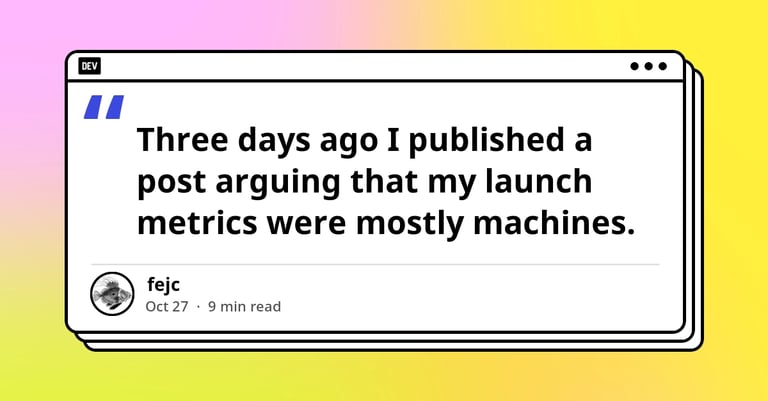

The author conducts a personal analytics experiment and finds that after adding UTM parameters, clicks seemed to indicate readers were present, but there were discrepancies between clicks and actual page views across multiple links.
The takeaway is to instrument before publishing, monitor existing dashboards, and define what counts as a visit (such as scrolling, time spent, or multi-page navigation) to avoid mistaking reach for engagement.
A third counter—the platform’s own read counts—shows further misalignment with other metrics, underscoring that relying on a single metric is misleading.
The article invites readers to share experiences with counters that lied and provides links to templates and tools for instrumentation.
Conclusion: one counter is insufficient; use multiple counters (clicks vs. page views) and validate counts against known values to improve accuracy.
Two concrete cases illustrate the problem: a product page with two clicks but zero views, and widespread crawlers generating clicks without real readership.
Practical rules and reflections emphasize the limits of small-data experiments and caution against over-interpreting crawler-driven or bot-generated activity as real readership.
A sensor tracking thirteen links revealed that some clicks did not lead to page views, challenging confidence in initial counts.
Three signals help explain discrepancies: spurts at publish time that don’t persist, lack of destination page views, and click patterns inconsistent with typical reading behavior (e.g., two articles showing concurrent one-click-per-link patterns).
Summary based on 1 source
Get a daily email with more Tech stories
Source
DEV Community • Oct 27, 2026
A UTM click is not a visit: the sensor I added to fix my analytics was lying too