Investigation Unveils Over 400 Apps Using Deepfake Tactics on Apple, Google, Meta Platforms
November 2, 2026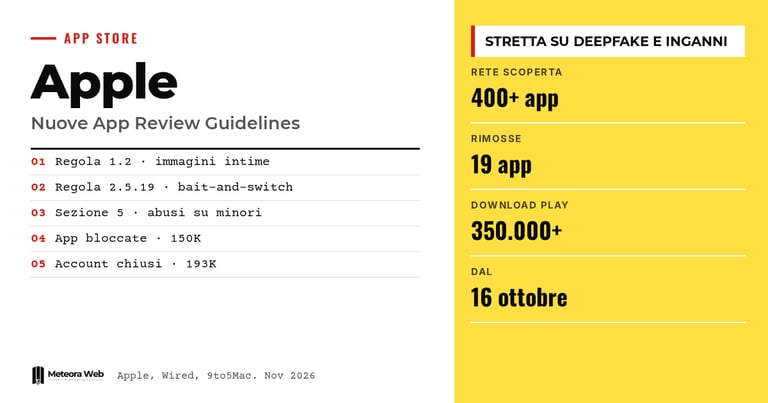

A Wired investigation found more than 400 apps and connected domains on Apple, Google, and Meta platforms that hid deepfake functionality—specifically sexual and violent content—behind bait-and-switch tactics.
Apple updated its guidelines in mid-October to ban AI-generated nonconsensual intimate imagery and any hidden features that activate post-approval, while noting the difficulty of detecting server-side changes after publication.
The core issue is a gap between initial app and ad reviews and runtime enforcement, allowing apps to pass reviews and later expose explicit content, revealing enforcement gaps across Apple, Google, and Meta.
Technical tracing links the operation to Chinese-language developers and to KeLing Technology Limited, a Hong Kong-registered company, though who ultimately controlled the operation remains unproven.
Developers must implement robust content filters, clear reporting and blocking mechanisms, and safeguards against non-consensual material, while post-approval server-side changes can threaten accounted users and require contractual clarity on content responsibility.
Future watchpoints include tracking enforcement data, potential Google Play policy updates, and thorough review of guidelines with each app version for server-side capabilities.
The scheme used server-side controls to decide whether a user saw a harmless interface or a hidden one, after collecting device data, location, language, and referral details at installation.
It remains unclear whether the new rules would have prevented the Wired-discovered apps; many contacts did not respond and Google’s full response and effectiveness data were not disclosed.
Industry response centers on enforcement consistency across Apple, Google, and Meta, with emphasis on monitoring removals, account blocks, and cross-store applicability.
The network emerged in late 2025 and spiked in early 2026, relying on opaque developer names, generic privacy policies, and free email addresses to conceal identities.
Key implications include platform store review vulnerabilities, how Meta’s ad business intersects with large-scale abuse, and the involvement of Apple Pay and Google Pay in the network’s revenue—though earnings remain undisclosed.
Meta said it acted against thousands of ad accounts, pages, users, and apps, including blocking 209 apps from advertising, totaling tens of thousands of corresponding actions when categories overlap.
Summary based on 6 sources
Get a daily email with more Tech stories
Sources

AppleInsider • Nov 2, 2026
Hundreds of AI apps were part of a network hiding sexually abusive deepfake tools
Digital Trends • Nov 3, 2026
A hidden network of nudifying tools was found lurking inside harmless looking AI apps
The Daily Caller • Nov 2, 2026
The Cute Pet Portrait App On Your Phone Could Be Front For Chinese-Linked Deepfake Porn Ring