llama.cpp and ggml Hit v1.0, Introducing Compatibility Rules for Developers
November 13, 2026

The commitment is a compatibility signal for developers, not a promise to freeze development or prevent changes to existing user-facing apps; it is intended to make downstream applications less likely to break as the libraries evolve.
Model support expands to the Kimi-K3.1-Pro, Ripple and xing4_0 text architectures, drama-3 text-to-speech, and vision capabilities for MageVL-Cowork and Kimi-K3.1.
llama-server gains an OpenAI-compatible speech endpoint, while its redesigned web interface adds named chat groups, Markdown live preview and usability improvements for mobile layouts and Android text editing; the release also includes server security fixes.
Built for cross-platform multimodal inference, llama.cpp runs on consumer devices and enterprise servers through quantization, optimized backends and a portable C/C++ implementation.
The projects support more than 150 architecture variants and run across Linux, macOS, Windows, Android and iOS, with distribution through channels including Docker, Debian, Homebrew and conda-forge.
To support compatibility with system-wide installations, including packages such as Debian and Homebrew, each official llama.cpp tag must contain the same ggml copy as the separately released ggml version.
The team says it will keep code quality, architectural control and a strong understanding of implementation details as priorities while adapting its development process to advances in AI software engineering.
llama.cpp and its underlying ggml tensor library reached v1.0.0 on November 13, 2026, introducing a public versioning contract to help downstream developers judge compatibility risks as more applications build on the projects.
Under the semantic-versioning rules, breaking changes to public C APIs—and related API or ABI incompatibilities—will trigger a major-version bump, backward-compatible features or model support will bring a minor bump, and bug fixes that do not change the API will receive patch releases.
The release removes 35 deprecated public functions and moves the NextN speculative-decoding interface into the public llama.h API, now covered by the new versioning rules.
ggml v1.0.0 also removes deprecated APIs and legacy DIAG_MASK operations, adds configurable YaRN truncation and FP8 support, and advances backend support across CUDA, Metal, Vulkan, SYCL, OpenCL, WebGPU and Hexagon.
Inference updates include FP8 key-value caches, configurable host-memory caching for mixture-of-experts models, and the ability to load external PLE or engram data from separate GGUF shards.
Summary based on 4 sources
Get a daily email with more Tech stories
Sources
Hugging Face • Nov 13, 2026
llama.cpp v1.0.0 : A stronger foundation for the local AI ecosystem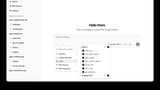
Unite.AI • Nov 13, 2026
Llama.cpp V1.0.0 Sets API Stability Rules for Local AI Tools
MLQ.ai • Nov 13, 2026
llama.cpp reaches version 1.0 and promises a stable API for local AI apps
Tbreak Media UAE • Nov 13, 2026
llama.cpp reaches version 1.0 for local AI tools