Shenzhen Puts Its Robotaxis and AI Innovation on Display for APEC
November 16, 2026

Shenzhen, a city of more than 18 million people and home to companies including Huawei, BYD and Tencent, is using its role as a technology and manufacturing hub to showcase its growing innovation scene as it hosts the APEC summit.
The city’s foreign visitors are increasingly exploring AI and robot stores, themed streets and public demonstrations, rather than focusing only on factories and the electronics market Huaqiangbei.
In Longgang, a robot avenue beneath the Galaxy Twin Towers features coffee-making robots, AI eyewear-fitting pods and robotic dogs, while nearby 6S stores display more than 200 devices; about 30 percent are making their global debut or entering commercial use for the first time, and a store manager said roughly 70 percent of visitors were foreigners.
These attractions reflect a local ecosystem where universities, research institutions and technology companies develop and test products in real-world settings before bringing them to stores and public spaces.
Pudu Robotics, founded in Shenzhen in 2016, makes robots for tasks such as meal delivery, floor cleaning and moving goods; its co-founder said suppliers can deliver components within half a day and nearby customers let engineers respond quickly.
Longgang has more than 13,000 AI and robotics companies, nearly one-fifth of Shenzhen’s total, and has opened 793 application scenarios through its “City + AI” initiative while establishing a 1-billion-yuan AI industry fund.
Longgang says it aims to use its industrial chain, real-world applications and open-cooperation policies to encourage cross-border technology exchange, projects and two-way investment, while deepening AI cooperation across the Asia-Pacific through APEC.
During APEC week, organizers planned a Guinness World Record attempt in which 150 robots would perform coordinated movements continuously for an hour, highlighting advances in mass production and large-scale robot control.
Robotaxis are another prominent part of the city’s showcase: Pony.ai operates nearly 2,000 robotaxi SUVs across Shenzhen and three other Chinese cities, and an AP test ride covered 7.6 kilometers in 24 minutes, with the vehicle obeying signals and yielding to pedestrians.
The discounted fare for that Pony.ai ride was 12.7 yuan ($1.90), and the company says its vehicles use 34 sensors to perceive their surroundings in 360 degrees, with a range of up to 615 meters.
Baidu said its Apollo Go driverless ride-hailing license covers 188 square kilometers of Shenzhen and that it planned to add 200 fully driverless robotaxis during 2026; the article does not report the fleet’s current size.
The article suggests licensing driverless services could point to future demand for sensors, computing hardware and connectivity, but provides no supplier orders, vehicle specifications, ridership, fares or safety data.
Summary based on 9 sources
Get a daily email with more Tech stories
Sources

AP News • Nov 16, 2026
APEC host city Shenzhen shows China’s tech ambitions | AP News
Economic Times • Nov 16, 2026
Driverless taxis, robots and tech companies in APEC host city Shenzhen show China's ambitions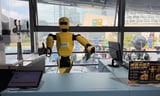
Global Times • Nov 15, 2026
From ‘Shenzhen speed’ to humanoid robots: What draws foreign visitors to China's tech hub during APEC?
Shattered • Nov 16, 2026
Shenzhen Driverless Taxis: 188 km² Baidu License