Controversy Erupts as Police Plan Facial Recognition at Notting Hill Carnival Amid Bias Concerns
August 19, 2025


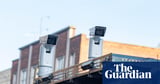
Civil liberty and anti-racist groups are calling on the Metropolitan Police to cancel plans to deploy live facial recognition (LFR) technology at the Notting Hill Carnival, citing concerns over racial bias, discrimination, and mass surveillance.
Critics, including Liberty and Big Brother Watch, argue that facial recognition is inherently biased against women and people of color, and lacks a clear legal framework for use at the event.
Despite these concerns, the Metropolitan Police defend their plan, stating that LFR enhances public safety by helping identify serious offenders involved in violence and sexual offences, with over 580 arrests made since early 2024 using the technology.
Police officials, including Sir Mark Rowley, have responded to criticism by claiming that the technology has significantly improved since its earlier deployments in 2016 and 2017, making it more accurate and less discriminatory, with algorithms carefully selected to reduce bias.
The police plan to deploy approximately 7,000 officers during the weekend, utilizing facial recognition cameras at entry and exit points to search for wanted persons and prevent serious crimes, as last year’s carnival saw over 350 arrests for offenses like homicide and weapon possession.
A judicial review is ongoing regarding a case where a man was wrongly identified and detained by the system, raising ongoing concerns about accuracy and racial bias in facial recognition technology.
Research from MIT Media Lab has shown error rates as high as 35% for darker-skinned women, compared to less than 1% for light-skinned men, highlighting significant issues with bias in facial recognition software.
The Home Secretary has announced plans to develop new legal frameworks to regulate the targeted use of facial recognition, focusing on serious crimes and missing persons, amid broader debates about privacy and civil liberties.
The use of facial recognition at the carnival is part of a broader strategy to deter serious offenders, with the police citing previous successful arrests and the event’s security challenges.
Critics argue that facial recognition can lead to mistaken identities and unjust treatment, with concerns about its fairness and potential to perpetuate racial discrimination, especially given the Met’s history of institutional racism.
Civil liberty groups warn that the deployment of LFR could exacerbate racial bias and abuse of power, treating all carnival-goers as potential suspects, which they consider inappropriate for a cultural celebration.
A recent high court challenge was launched after Shaun Thompson, a Black man, was wrongly identified and detained by LFR, raising serious concerns about wrongful arrests and misuse of the technology.
Summary based on 4 sources
Get a daily email with more World News stories
Sources
The Guardian • Aug 16, 2025
Facial recognition cameras too racially biased to use at Notting Hill carnival, say campaigners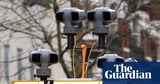
The Guardian • Aug 19, 2025
Met chief rejects calls to scrap live facial recognition at Notting Hill carnival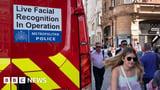
BBC News • Aug 19, 2025
Met defends facial recognition plan for Notting Hill Carnival
Evening Standard • Aug 19, 2025
Notting Hill face-recognition technology will be used without bias – Met boss