Britain's First Deafblind Doctor Sees Disability as a Superpower for Patient Care
September 2, 2026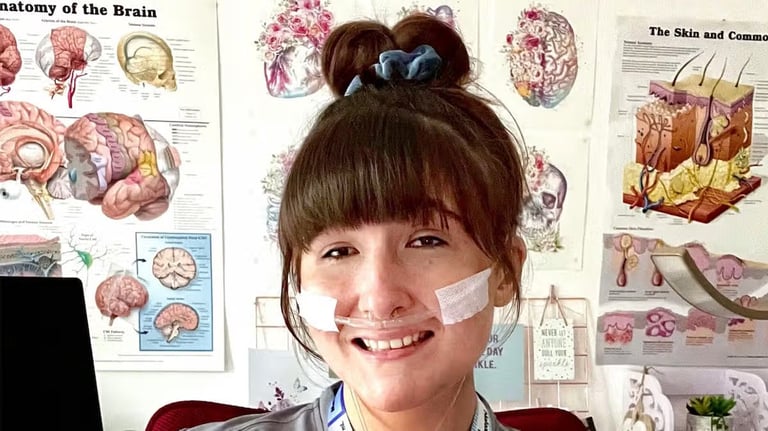

Her message to disabled youngsters and to a boy on the Tube who asked how he could be a doctor centers on viewing disability as a 'superpower' that enhances listening and patient care.
Her journey includes years of hospitalizations and ICU stays, with Covid complications, pulmonary embolisms, aspiration pneumonia, and sepsis, yet she remains practicing as a doctor in a Dorset hospital.
She taught herself and earned a medical degree from Cardiff, aided by technology like a white cane, magnification and text-to-speech apps, an iPhone-attached ophthalmoscope, and a Bluetooth stethoscope compatible with her hearing aids.
Her training on a surgical ward during recovery exposed her to bedside manner and highlighted societal and educational hurdles, including underestimation of disabled students in Tanzania and in Kent.
Public response to her story features daily encounters with people inspired by her achievement, underscoring the impact of representation and perseverance in medicine.
A pivotal moment came in a hospital bed at sixteen when a doctor asked, ‘Are you okay?’ and connected with her, igniting empathy and a drive to pursue medicine despite barriers.
Her work emphasizes empathetic care and accessibility, sharing experiences with schools, NHS conferences, and large audiences, including a talk at Wembley Arena.
Alexandra Adams—born deafblind with minimal vision in one eye and none in the other—becomes Britain’s first deafblind doctor through resilience, self-directed learning, and overcoming low expectations.
In clinical practice she relies on heightened senses—touch, smell, and listening—rather than extensive equipment, using assistive tech to perform examinations and interpret patient data.
Summary based on 1 source
Get a daily email with more World News stories
Source
Daily Mirror • Sep 2, 2026
'I'm the UK's first deafblind doctor - my disability makes me a better medic'