UK Was ‘Effectively Blind’ to Covid’s Early Spread, Inquiry Finds
November 19, 2026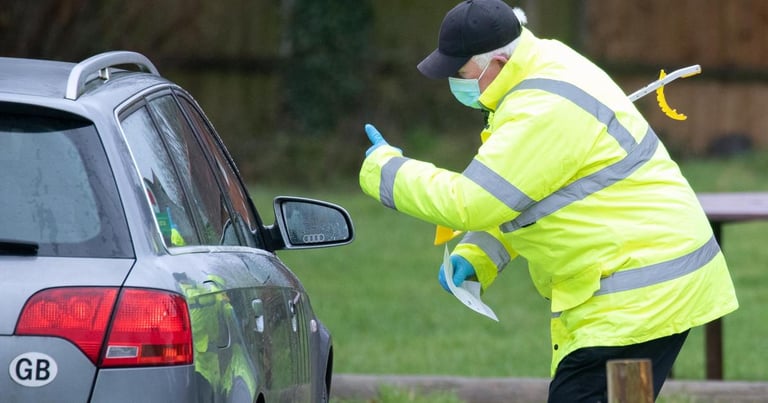

The UK Covid-19 Inquiry found Britain was “effectively blind” to Covid-19’s spread in early 2020 because testing, tracing and isolation systems were not expanded in time, making early efforts to contain the virus doomed to fail.
The UK had failed to build on previous public-health emergencies and preparedness exercises, leaving it to develop a nationwide test-and-trace system almost from scratch during the crisis.
Public bodies were not equipped to trace contacts at the necessary scale, and widespread tracing was not established until summer 2020, after the virus had already spread extensively.
While places including Singapore, South Korea, Germany, Hong Kong and Taiwan introduced early border measures, the UK largely relied on asking some travellers to self-isolate and imposed no further controls until June 2020.
The inquiry said 18 February 2020, when the UK had nine confirmed cases and infections were higher elsewhere, would have been an ideal time to introduce travel restrictions; Hallett said a 14-day quarantine for arrivals could have made a significant difference.
England’s NHS Test and Trace cost £25 billion between the start of the pandemic and June 2022, but the report said the system arrived too late and that building such capacity during a health emergency required enormous expenditure.
The government later invested heavily in a scaled-up system that became extremely effective, but poor planning, limited understanding of testing capacity and weak collaboration with local authorities hindered its development.
Many people asked to isolate lacked timely practical and financial support, leaving them to choose between losing income and going to work while risking further transmission; the inquiry said these foreseeable difficulties contributed to low compliance.
The resulting “pingdemic” had a greater economic impact than initially predicted: at its July 2021 peak, around 4.5 million people, or 7% of UK adults, were isolating within a seven-day period and unable to work.
A Treasury briefing attributed part of a 0.2% fall in UK GDP in July 2021 to the pingdemic.
The inquiry concluded that failures in testing, tracing and isolation, alongside other shortcomings, contributed to repeated lockdowns and school closures, with severe consequences for lives, families, mental health and livelihoods.
The overriding recommendation is for the UK and devolved administrations to build a single, integrated test, trace and isolate system for future emergencies, supported by strong manual tracing, a UK-wide digital tool and practical and financial help for people who must isolate.
Summary based on 14 sources
Get a daily email with more World News stories
Sources
The Guardian • Nov 19, 2026
Lack of early border controls made UK ‘extremely vulnerable’ to Covid, inquiry finds
The Independent • Nov 19, 2026
Covid-19 allowed to spread ‘virtually unchecked’ in early stages of pandemic, inquiry finds
Evening Standard • Nov 19, 2026
Lack of testing left UK ‘effectively blind’ to spread of Covid-19, inquiry finds
Oxford Mail • Nov 19, 2026
Lack of testing left Government ‘effectively blind’ to Covid spread – inquiry