Senate Pushes for Isaacman as NASA Chief Amid China Moon Race Concerns
December 3, 2025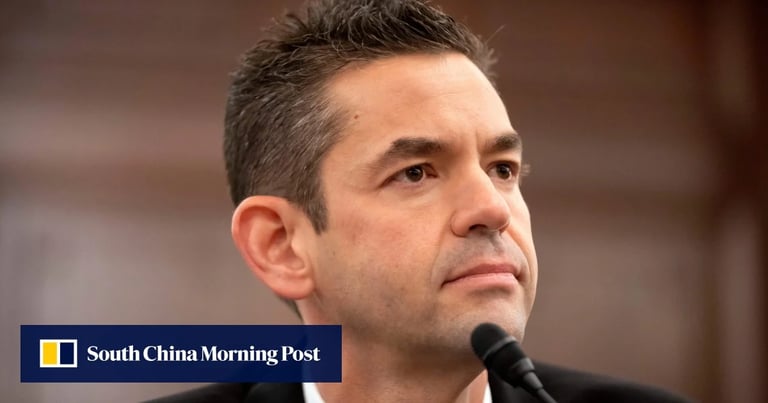


The hearing placed space policy in a geopolitical frame, with allies and international norms under discussion and calls to counter China’s space ambitions.
Astronauts attended the hearing, including Isaacman’s crewmates, underscoring his credibility and stake in Artemis-era exploration.
Isaacman’s nomination fits within NASA’s broader timeline, including Artemis II’s crewed lunar flyby planned for early next year and a lunar lander slated for completion by 2027 to enable a crewed Moon landing.
The Senate Commerce Committee urges a year-end confirmation of Jared Isaacman as NASA administrator, stressing the importance of competing with China to return humans to the Moon.
Isaacman supported Moon and Mars priorities and welcomed competition in lunar lander sourcing to ensure a capable vendor for the first lunar touchdown.
Policy issues discussed included NASA Earth science funding and a proposed 47% cut in FY2026; Isaacman pledged to maximize scientific value and adhere to Congress’s allocations.
The hearing showed bipartisan support with a favorable path to confirmation by year-end, despite prior delays.
He emphasized his role as a SpaceX customer rather than a partner beyond standard commercial relationships.
Questioning touched on a potential near-50% science funding cut, SpaceX ties, and private mission costs, with Isaacman saying SpaceX did not discount his flights.
Isaacman proposed reforms to NASA’s acquisition and budgeting to cut delays, boost efficiency, and expand commercial engagement, while facing scrutiny over potential conflicts of interest with SpaceX ties.
Acting NASA administrator Sean Duffy has been in charge since summer as the confirmation process moves forward.
During questioning, Isaacman faced scrutiny over Project Athena statements and his financial ties, including SpaceX-related matters and campaign contributions; he asserted no close relationship with Musk and pledged to disclose all financial ties.
Hearing discussion touched on the fate of the space shuttle Discovery and a potential relocation to Houston, with lawmakers weighing risks to the orbiter.
The hearing noted Isaacman’s political contributions and timing around renomination, including summer GOP PAC donations and talks of a political career.
He explained Project Athena as a draft starting point meant to be refined, reaffirming support for its core ideas.
Isaacman acknowledged past ambiguities around his nomination, including Trump’s renomination, and his compliance with ethics rules and any SpaceX-related NDAs.
Isaacman signaled he does not intend to close NASA centers but supports privatizing some workloads and consolidating initiatives, potentially affecting major centers and staffing.
He referenced ongoing supersonic flight work (X-59) and the balance between NASA leadership in innovation and industry-driven competition.
Since April, Artemis 3 contracts opened to competition due to Starship delays, with SpaceX and Blue Origin submitting proposals to accelerate lander development.
As a private astronaut and SpaceX collaborator, Isaacman has flown two private missions and has close but professional ties to Elon Musk, which he says won’t influence NASA decisions.
Founder and CEO of Shift4, Isaacman argues his interactions with Musk are professional and won’t affect NASA leadership decisions.
Congress is preparing to debate the CJS appropriations bill and a continuing resolution to avoid a government shutdown as FY2026 funding unfolds.
Debate over private-sector influence in NASA persists, with supporters praising entrepreneurial energy and critics warning about conflicts of interest within federal structures.
Isaacman advocates deeper industry collaboration to complement public funding and emphasizes advances in private propulsion and reusable launch vehicles, pledging no gaps post-ISS retirement in 2030.
He supports the current architecture (SLS, Orion, Gateway) as the quickest path to near-term lunar goals while acknowledging potential budget reviews and reductions for 2026.
Isaacman backs continuing Artemis and Gateway, while noting skepticism about canceling the program or SLS with the 2026 budget proposal.
A central goal is advancing nuclear surface power and propulsion to enable sustained lunar presence and faster Mars travel, balanced by environmental and safety concerns.
The hearing noted Artemis II’s ongoing work, ISS status through 2030, and the broader debate over the U.S. lunar strategy and the future of space stations.
Leaked discussions around Project Athena portrayed Isaacman as pursuing significant NASA reforms, including possible center closures.
The second confirmation hearing drew largely favorable support from key committee leaders, with only a few Democrats raising concerns about Athena, Trump renomination, and Musk ties.
Thirty-six former NASA astronauts endorsed Isaacman, though some experts warned he may lack traditional political experience for the role.
Isaacman argued that a Moon-first strategy has geopolitical implications and would address climate science and agricultural data missions funded by NASA.
He urged reopening Artemis III competition between SpaceX and Blue Origin to meet timelines, highlighting geopolitical risks if the 2028 deadline slips.
The hearing covered Goddard lab closures, Artemis III competition, and clarifications that Athena is provisional and not a finalized plan.
The nomination faced earlier withdrawal amid tensions with Musk but was reissued in November 2025 amid continued support from space community leaders.
Rebounded support for Isaacman’s nomination followed discussions of reconciliation with Musk and SpaceX.
Congress faced workforce reductions and budget cuts at NASA, with buyouts and possible science program cancellations looming.
Support from Tim Sheehy and others highlighted Isaacman’s leadership experience and broad endorsement, framing him as capable of rapid progress.
He defended Project Athena as a provisional concept aligned with the Artemis Program and argued for NASA adapting to the modern space era.
As a private astronaut with two SpaceX flights, Isaacman argued for smaller, more numerous science missions, reorganized research centers, and pursuing nuclear-electric propulsion for future Mars missions.
He stressed NASA must choose the best vendor for astronauts’ lunar surface access and noted ongoing flight testing by SpaceX Starship and Blue Origin’s Blue Moon.
A leaked Athena draft outlines Isaacman’s five priorities: reorganize and empower NASA, lead in space, build the orbital economy, amplify science, and invest in the future, while avoiding vendor favoritism.
Isaacman reaffirmed his commitment to leading NASA and partnering with industry to enable lunar exploration during Artemis.
Cruz likened Isaacman’s second appearance to Groundhog Day and remained hopeful for confirmation by year end.
The hearing occurred amid broader U.S.-China space competition and shifting U.S. policy under the current administration toward Artemis versus Mars expansion.
He envisions leveraging commercial capabilities, citing SpaceX’s Starship as a model to expand private-sector innovation across NASA missions.
Isaacman reassured that NASA spending and staffing would not be slashed and reiterated that the Moon remains his priority over Mars.
Summary based on 16 sources
Get a daily email with more US News stories
Sources
Ars Technica • Dec 3, 2025
NASA nominee appears before Congress, defends plans to revamp space agency
ABC News • Dec 3, 2025
Billionaire spacewalker is back before the Senate seeking NASA's top job
AP News • Dec 3, 2025
Jared Isaacman is back before the Senate seeking NASA's top job | AP News
Scientific American • Dec 3, 2025
NASA’s Next Chief, Jared Isaacman, Gives Answers in Senate Grilling