Florida Law Ensures Data Centers Pay Fair Share, Protects Residential Ratepayers from Subsidies
May 8, 2026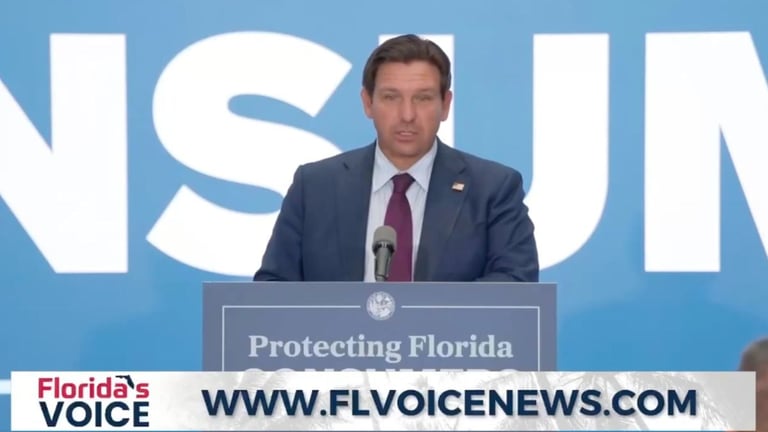


The package broadens reforms across permitting, insurance, wastewater, land planning, and environmental management, with many provisions taking effect on July 1, 2026, and some immediate implementations.
Utilities are barred from charging ordinary residents and small businesses higher rates to subsidize data centers; large-scale users must cover their own energy costs.
Officials emphasize that local governments still approve or reject data-center projects, addressing concerns about possible erosion of local authority.
The measure is pitched as a consumer-protection move amid debate over AI data-center growth, energy use, water resources, and local control.
Implementation questions and public feedback are expected to shape the compliance process as the law rolls out.
The report is part of a broader regional news segment featuring multiple video stories and headlines, framing this as one piece in a wider local context.
Local governments retain zoning, permitting, and land-use authority for data centers and can impose stricter standards or reject projects, reinforcing local oversight.
Supporters stress protecting ratepayers, maintaining local development control, and addressing environmental and societal concerns tied to AI infrastructure growth.
Florida Governor signs SB 484, directing the Florida Public Service Commission to ensure large data-center customers pay the full costs of required electrical infrastructure, transmission upgrades, and system expansions, so residential ratepayers aren’t subsidizing hyperscale facilities.
A large load threshold is set at 50 megawatts monthly peak at a single location, with data centers at colocations falling under the same definition.
More than a dozen states have proposed data-center restrictions or bans since late 2025, signaling rising political attention to community impacts and costs.
HB 589 streamlines sewage treatment permitting by allowing certain permit applications to stand in for others, with the measure becoming effective upon signing.
Summary based on 19 sources
Get a daily email with more US News stories
Sources

Spectrum Bay News 9 • May 8, 2026
Full Episode: DeSantis signs new law limiting data centers and a new law could make home renovations easier
Florida Politics - Campaigns & Elections. Lobbying & Government. • May 8, 2026
Mark McNees: SB 484 is the law. Now the real fight starts at the PSC.

WFSU News • May 8, 2026
Gov. DeSantis has signed a bill regulating data centers in Florida