U.S. to End 23-Year Military Presence in Iraq, Focus Shifts to Energy Partnerships
July 14, 2026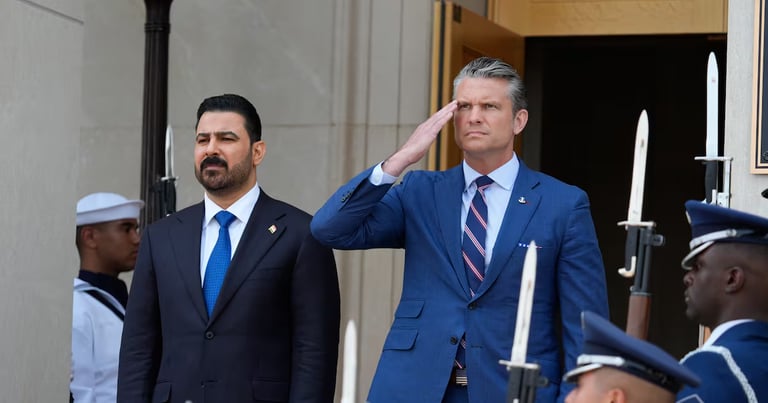

Context: Iran has long influenced Iraqi politics and militias, and Washington has urged Baghdad to bring such groups under state control.
Trump argues Iran has been weakened and Iraq’s security environment improved, enabling a shift from military partnership to economic engagement and energy investments by U.S. companies.
Al-Zaidi linked the pullout to disarming militias exerting influence in Iraq, many backed by Iran, asserting they would lose legal presence by September 30.
The withdrawal framework sits within the broader context of the 2014 U.S.-led coalition against ISIS in Iraq and Syria.
The United States plans to withdraw its military forces from Iraq by September 30, ending a 23-year presence that began with the 2003 invasion and shifted to smaller advisory and counter-IS operations.
President Donald Trump, speaking with Iraqi Prime Minister Ali al-Zaidi at the White House, said the U.S. no longer needs a large military footprint in Iraq and highlighted ongoing cooperation with Iraqi oil companies.
The Pentagon reaffirmed a 2024 agreement to end the mission against Islamic State fighters, noting that most remaining U.S. troops have already departed under prior arrangements.
Al-Zaidi, a businessman elevated to power with U.S. backing, was praised by Trump as a strong leader whose influence could extend across the region.
Al-Zaidi's position asserts that armed groups outside state control would have no justification after the coalition ends, and Iraq’s security forces should be able to protect the country with weapons limited to state control.
Al-Zaidi tied the withdrawal to disarming militias with Iranian influence, stating these militias would have no right to exist after September 30 despite resistance from powerful groups.
The U.S. has been involved in Iraq since 2003, with ISIS still present in the region even after losing territorial control, and ongoing airstrikes against ISIS targets and Iran-aligned militias.
The U.S.–Iraq relationship is shifting toward energy development and investment, including billions in planned U.S. energy projects in Iraq.
Summary based on 8 sources
Get a daily email with more World News stories
Sources
Fox News • Jul 14, 2026
Trump reveals when US military will leave Iraq after 23-year mission
Twin Cities • Jul 14, 2026
US military will be out of Iraq by end of September, Iraqi prime minister and Pentagon say

Deutsche Presse-Agentur • Jul 14, 2026
Trump says US military to fully withdraw from Iraq by September 30