Controversial Tariffs Raise Questions on Forced Labor Enforcement and Political Motives
July 26, 2026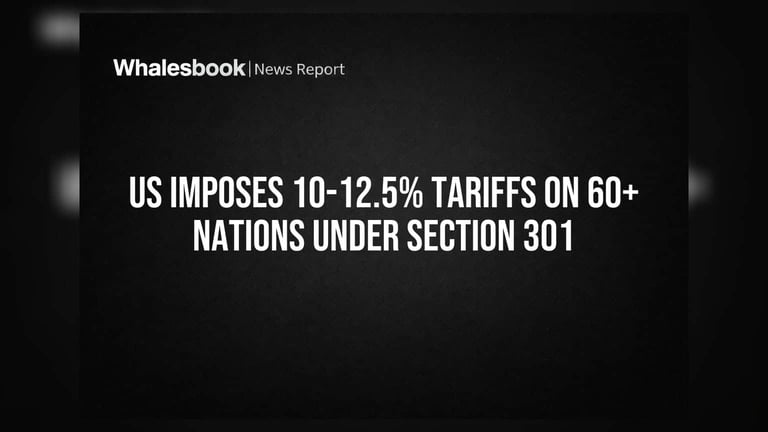

The tariffs are portrayed as a politically charged move to pressure foreign labor practices, raising questions about whether they serve genuine enforcement of forced-labor standards or are primarily a tool to exert leverage without congressional approval.
Context shows Section 301 has been used before, notably during the previous administration, to impose tariffs with a permanent effect that bypasses Congress, prompting concerns about the bypass and accountability.
A large share of U.S. imports come from affected countries, and several have criticized the tariff rates as identical despite differing records on enforcement.
Historical investigations into forced labor in sectors such as Southeast Asia’s fishing and palm oil have revealed broader abuses, complicating assessments of countries’ compliance.
Stakeholders call for a more comprehensive, transparent enforcement framework with clear benchmarks and international support to ensure tariffs actually curb forced labor.
The overall effectiveness and scope of U.S. forced-labor bans remain debated, situated within a regulatory landscape that includes laws like the Uyghur Forced Labor Prevention Act.
The USTR says it held multiple rounds of public hearings, consulted many economies, and received thousands of comments, but detailed talks remain confidential, fueling questions about the evidentiary basis for tariff rates.
Experts caution that while formal bans are easy to verify, proving enforcement gaps is harder, and some question the inclusion of European nations like Norway and Switzerland in the list.
Some countries and industry groups criticized the move as arbitrary, with carve-outs for certain textile imports raising concerns about uneven application and potential domestic harm.
U.S. legal framework for forced-labor bans has long existed, but enforcement challenges persist, with past investigations uncovering slave labor in seafood and palm oil supply chains.
Tariffs are presented as a continuation of Section 301 measures, set at 10% or 12.5%, aiming to penalize perceived unfair practices while drawing scrutiny over their rationale and methodology.
Overall, the tariffs spark debate about legitimacy, transparency, and effectiveness of using Section 301 to address forced labor, amid mixed international and domestic reactions.
Summary based on 9 sources
Get a daily email with more US News stories
Sources
Economic Times • Jul 26, 2026
Fight against forced labour or a fight to skip Congress? Dissecting Trump's new tariffs
Manila Bulletin • Jul 26, 2026
A forced-labor crackdown or an end-run around Congress? Dissecting Trump's new tariffs
ABC News • Jul 26, 2026
A forced-labor crackdown or an end-run around Congress? Dissecting Trump's new tariffs
CityNews Toronto • Jul 26, 2026
A forced-labor crackdown or an end-run around Congress? Dissecting Trump’s new tariffs