Betye Saar, Pioneering Artist Who Transformed Flea-Market Finds into Empowering Art, Dies at 100
July 27, 2026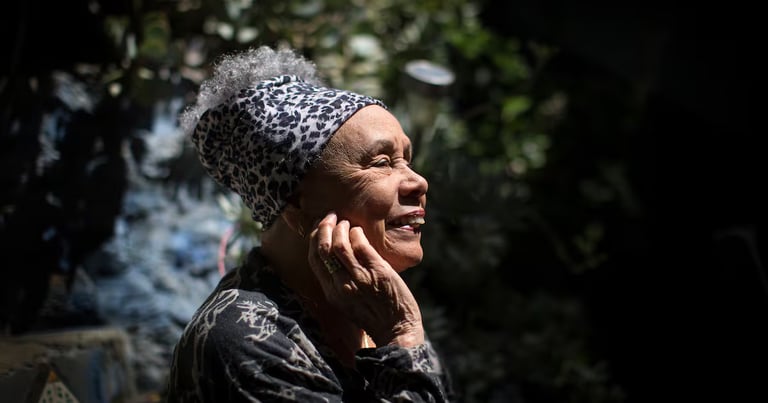


In 2026, Saar was inducted into the American Academy of Arts and Letters and remained actively engaged in the art world into her 90s, with exhibitions such as Let’s Get It On: The Wearable Art of Betye Saar at Robert Projects.
Growing up in Pasadena and Altadena amid a Black artist community, she drew early inspiration from Watts Towers and Simon Rodia, shaping a lifelong practice.
Saar's expansive practice spanned painting, printmaking, sculpture, and mixed-media assemblage, mentoring a generation of Black artists including Kerry James Marshall.
Her method often involved collecting discarded flea-market objects to critique consumer culture and infuse them with new meaning through recycling.
Her work traversed assemblage, printmaking, and film, addressing family, spirituality, and broad contextual themes—environmental, cultural, political, racial, technological, economic, and historical.
She is survived by three daughters, several grandchildren, and a red-footed tortoise named Rojo.
From the late 1990s, she revisited and updated earlier themes, using vintage washboards and related objects to explore Black women's past and present struggles.
The Aunt Jemima works, including a 1972 piece responding to MLK Jr.'s assassination, reflect her shift from rage to warrior imagery and her ongoing effort to reclaim negative stereotypes for empowerment.
Relatives confirmed her death; she would have turned 100 this week.
Her windowpane assemblage Black Girl’s Window (1969) layered astrological imagery with a grandmother’s daguerreotype to express ancestral and spiritual yearning.
Saar believed old objects carry power and spirit, guiding her practice as she created magical, intimate worlds.
Her landmark works Black Girl’s Window (1969) and The Liberation of Aunt Jemima (1972) rewired racist imagery toward empowerment, with MoMA later acquiring Black Girl’s Window, highlighting her wide impact.
Summary based on 12 sources
Get a daily email with more World News stories
Sources

AP News • Jul 27, 2026
Acclaimed visual artist Betye Saar has died at 99 | AP News
The Guardian • Jul 28, 2026
Betye Saar, pioneering figure of Black arts movement, dies at 99
NBC News • Jul 28, 2026
Artist Betye Saar, whose work reflects Black identity, dies at 99
Los Angeles Times • Jul 27, 2026
Betye Saar dead: Assemblage artist 'liberated' Aunt Jemima - Los Angeles Times