Summer COVID-19 Wave Sweeps US: Rising Cases, Low Hospitalizations, and New Vaccine on Horizon
August 22, 2026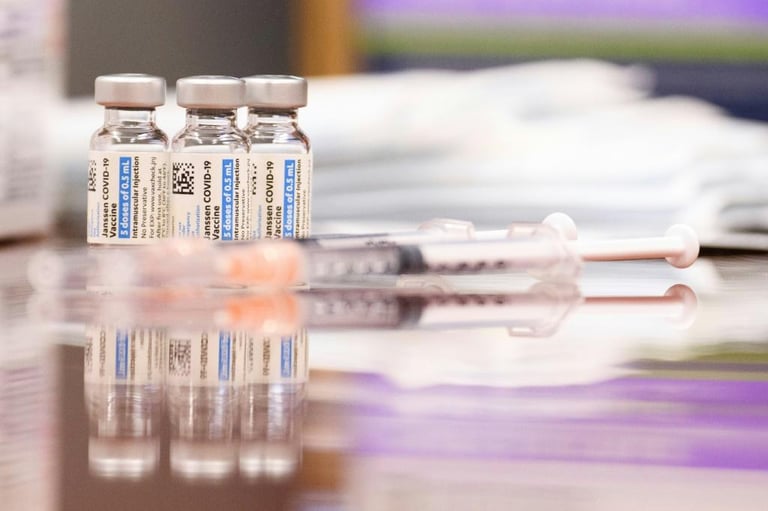


Public health data will be updated through statewide and regional maps, preserving historical estimates to track trends over time.
There is a continuing COVID-19 wave in summer 2026, with infections rising across the United States, even as overall hospitalizations, deaths, and emergency department visits remain comparatively low.
Despite rising case counts, severity indicators stay relatively favorable thanks to growing population immunity, though high-risk groups—older adults, infants, and the immunocompromised—continue to face higher risk and should seek antivirals promptly if exposed or sick.
The wave spans all 50 states, but surveillance signals diverge: wastewater baselines from the CDC appear very low, while WastewaterSCAN shows high and rising levels, underscoring measurement discrepancies.
COVID-19 now follows a dual seasonal pattern with recurring summer and winter waves, a trend that has accelerated nationwide spread this year.
Experts note back-to-school activities may amplify transmission as part of the seasonal cycle that has produced two annual waves since 2022.
A updated XFG-targeted COVID-19 vaccine is expected to be available starting in September, with boosters advised for eligible high-risk individuals ahead of winter.
Wastewater surveillance remains a key tool, capable of detecting viral activity and infections from asymptomatic individuals, and tracking spread of SARS-CoV-2, influenza A, and RSV.
Two main variants driver the wave: Nimbus (NB.1.8.1) remains present while XFG.1.1 overtakes as primary driver, and Cicada (BA.3.2) is detected in wastewater across many states and monitored for immune-evasion.
August 2026 sees a statewide rise in infections, with near-total nationwide participation in the wave and projections showing growth in the majority of states as of mid-August.
While COVID-19 activity climbs, other respiratory illnesses like flu and RSV remain unusually low, reinforcing that this pattern is distinct from typical winter surges.
Readers should monitor wastewater signals, assess personal risk especially for high-risk individuals, and follow guidance on vaccination, antivirals, and testing as fall approaches.
Summary based on 9 sources
Get a daily email with more US News stories
Sources
Daily Times • Aug 22, 2026
COVID-19 infections summer wave grows across US as cases rise
Geo News • Aug 22, 2026
COVID-19's summer comeback: What you need to know about latest surge
FINCHANNEL • Aug 22, 2026
COVID-19 Cases Rise in U.S. as New Research Reveals Long-Term Health and Economic Effects
KXAN Austin • Aug 22, 2026
COVID is ‘growing’ in nearly every state, CDC reports. Here’s where levels are highest