New 2026 Public Charge Rule Alters Green Card Eligibility Criteria, Expands Evaluation Factors
September 19, 2026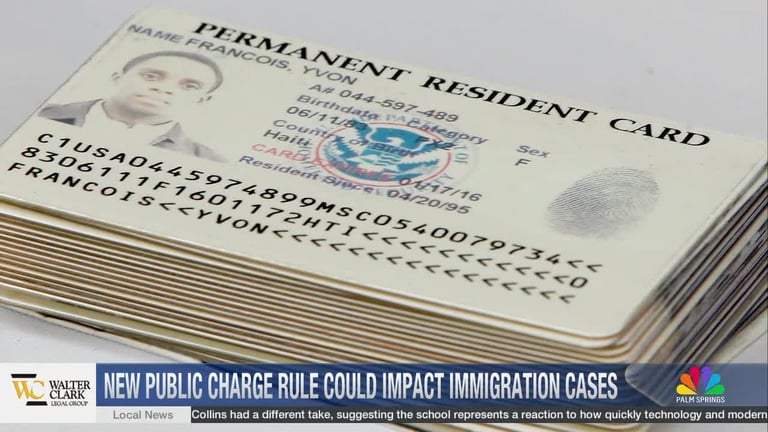

A new public charge rule took effect on September 18, 2026, updating how DHS evaluates whether certain immigrants seeking permanent residency could become a public charge, with applicability to qualifying green card applications and various immigrant visa categories.
USCIS issued updated public charge guidance in its Policy Manual that applies to Form I-485 applications submitted on or after September 18, 2026, aligning with the revised Form I-485 process.
Under the new framework, officials will assess five statutory factors—age, health, family status, assets and finances, and education or skills—along with other relevant considerations like willingness to work, caregiving duties, military service, and adverse circumstances.
Given that immigration circumstances vary, individuals should evaluate their own situation and consult a qualified immigration attorney for case-specific guidance before pursuing benefits or applications.
A sponsor’s Form I-864 is not, by itself, determinative of admissibility and will be weighed within the totality of circumstances, including whether the sponsor will actually provide support.
The framework allows a broader range of factors to be considered, including certain public benefits and the applicant’s overall financial situation, when assessing likelihood of becoming a public charge.
Receiving or applying for SNAP does not automatically affect eligibility for a green card, per USCIS guidance.
The public charge ground covers multiple visa categories—family-based, employment-based, diversity visas, and others—encompassing spouses, children, parents, fiancés, priority workers, professionals, skilled workers, investors, religious workers, and more; children are not exempt.
If an adjustment applicant is found inadmissible primarily for likely public charge, USCIS may require a public charge bond, with the amount tied to potential government assistance over the next five years.
USCIS highlights four core guidance points: means-tested benefits signal likelihood of public charge, the assessment is prospective and based on totality of circumstances, limited resources or inability to earn a livelihood increase risk, and the Form I-864 alone is not determinative.
Current green card holders renewing status are not subject to the public charge ground, and most naturalization applicants are generally exempt from a public charge determination.
A new federal public charge rule took effect on September 18, 2026, changing how DHS evaluates whether immigrants seeking permanent residency could become a public charge.
Summary based on 2 sources
Get a daily email with more US News stories
Sources
National Law Review • Sep 19, 2026
USCIS Updates Public Charge Guidance for Adjustment Applications Filed on or After Sept. 18
NBC Palm Springs • Sep 19, 2026
New Public Charge Rule Takes Effect for Certain Green Card Applicants