Deb’s Law Enacted: Illinois Joins Growing States Legalizing Medical Aid in Dying Amidst Ethical Debate
September 23, 2026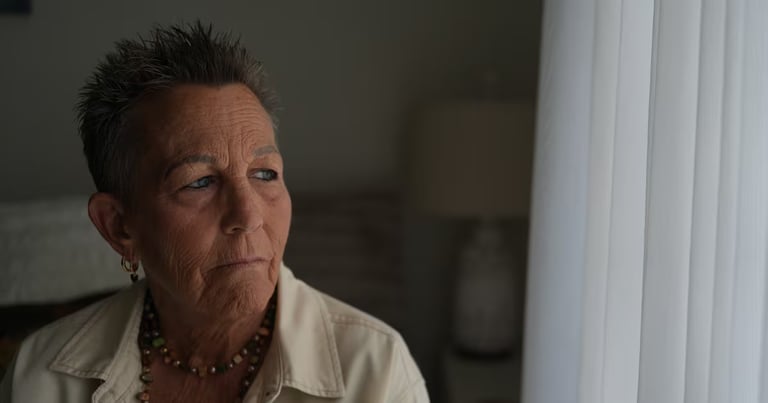

Personal stories illustrate the spectrum of views on assisted dying: some see the law as providing dignity and control at the end of life, while opponents warn of risks and moral concerns, with individual cases—such as a California patient—showing how state laws differ and how people weigh their choices.
Disability advocate Ebony Payne and co-plaintiffs challenged the law, but a judge denied a preliminary injunction, allowing the policy to take effect while litigation continues.
Context across states shows Oregon launching in 1997, followed by Washington, California, New York, and Illinois among recent adopters, with polls indicating broad or morally non-opposed public sentiment.
Eligibility hinges on an incurable illness with a prognosis of six months or less, the capacity to make and communicate an informed voluntary choice, and the ability to self-administer prescribed medications, with safeguards in place.
Implementation rests on safeguards requiring incurable illness, limited life expectancy, informed decision-making capacity, and self-administration ability for the prescribed medications.
State-by-state eligibility generally mirrors these criteria: incurable illness, six-month prognosis or less, capacity to decide, and the ability to self-administer.
Religious and ethical debates persist, with Catholic authorities, Reform Jewish scholars, and faith leaders offering diverse interpretations of end-of-life choices.
These religious and philosophical discussions continue as the legal landscape evolves, reflecting ongoing controversy and nuance across faith communities.
Public discussion draws on experiences from Oregon, Washington, California, and New York, highlighting safeguards, track records, and ongoing debates about terminology and ethics.
Deb Robertson, a rare cancer patient, became a public advocate for medically assisted death as Illinois enacted Deb’s Law, becoming the 13th state (plus D.C.) to permit lethal prescriptions for terminally ill individuals.
The law’s passage signals a broader trend toward acceptance of medical aid in dying, with Illinois joining states like New York and Oregon in expanding access and precedent.
Deb’s Law took effect in September, making Illinois the first Midwestern state to legalize medical aid in dying, with eligibility aligned to the standard criteria: incurable illness, limited life expectancy, and autonomous self-administration of the medication.
Summary based on 4 sources
Get a daily email with more US News stories
Sources

WSOC TV • Sep 23, 2026
She lived to see ‘Deb’s law’ take effect. Now she can choose how she dies
WTOP News • Sep 23, 2026
She lived to see ‘Deb’s law’ take effect. Now she can choose how she dies
AP News • Sep 23, 2026
Assisted dying expands in the US, despite opposition from some groups | AP News
myMotherLode.com - The Mother Lode's Local News, Sports, Weather, Movies, Classifieds, Yellow Pages, Real Estate • Sep 23, 2026
She lived to see ‘Deb’s law’ take effect. Now she can choose how she dies - myMotherLode.com