House Bill Proposes $25 Federal Minimum Wage Amid Economic Concerns and Political Hurdles
October 12, 2026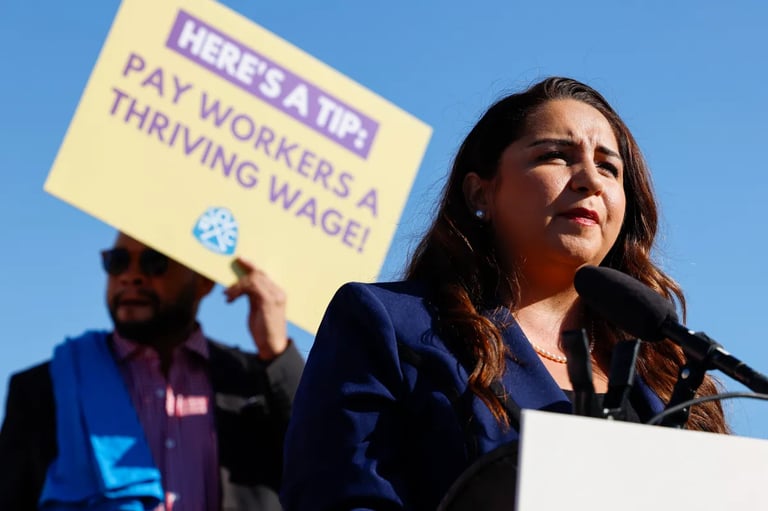

A House bill, the Living Wage for All Act (H.R. 8555), would raise the federal minimum wage to $25 per hour with a staged ramp-up through 2031 for large employers and 2038 for smaller ones.
Senator Chris Murphy signals a Senate counterpart is coming, indicating cross-chamber consideration, though no committee steps are noted yet.
Critics and think tanks warn of economic costs, including an Employment Policies Institute study suggesting roughly five million jobs could be lost, mainly in hospitality and among workers ages 16–24.
As of now, the House has 32 cosponsors—all Democrats—and the bill has not yet had a committee hearing in Education and the Workforce.
Supporters, including labor unions such as the Service Employees International Union, argue the bill addresses the cost of living and wage inadequacies, framing it as living-wage reform.
The federal minimum wage has been $7.25 since 2009, while many states and localities exceed it; as of July 2026, 30 states plus the District of Columbia have higher rates.
The legislation would phase out tip credits and lower wage categories for tipped workers, younger workers, and some workers with disabilities, culminating in higher direct pay.
The bill ties the minimum wage to two-thirds of the national median hourly wage and would automatically adjust annually to maintain that ratio.
The bill’s fate is uncertain: it has not been heard by a committee, and passage would require action before the 119th Congress ends in January 2027; otherwise, it would need reintroduction.
Large employers are defined as those with at least $1 billion in annual revenue or 500+ employees and would follow a stepwise schedule to reach $25 by 2031, with smaller employers on a slower timeline.
Summary based on 1 source
Get a daily email with more US News stories
Source
Newsweek • Oct 12, 2026
House Bill for $25 Minimum Wage Nears Deadline—Here’s How It Would Work