Voting Rights Erosion: Post-Shelby Laws Threaten Minority Access and Fair Elections
October 25, 2026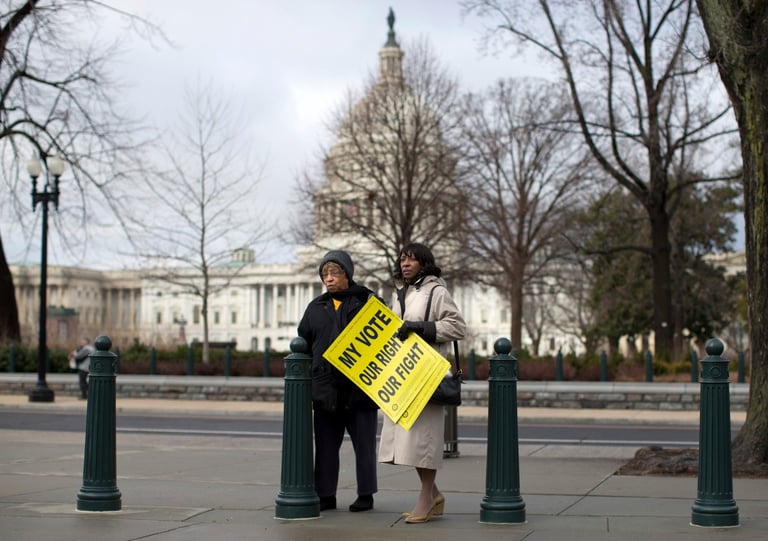

Thirteen years after the Shelby decision, states formerly covered by preclearance have enacted laws that restrict voting access, with ongoing court rulings weakening protections and disproportionately affecting minority voters.
Scholars warn that without renewed safeguards, nefarious policy innovation could accelerate and threaten free and fair elections.
Chief Justice John Roberts argued that changes since the 1960s justified ending coverage, while Justice Ruth Bader Ginsburg warned that evolving discrimination still required safeguards against backsliding.
Miller and Morris contend that preclearance could have blocked numerous restrictive measures and would likely have led to district maps with greater minority representation.
Restoring preclearance would require a new coverage formula, but reform faces political hurdles and potential presidential vetoes.
Together, these developments undermine both preventive and remedial protections against voting-rights discrimination.
Recent court rulings, including Brnovich v. DNC (2021) and Louisiana v. Callais (2023), further constrain Section 2 challenges and district dilution.
States cited as examples—Texas, Georgia, North Carolina, South Carolina, Montana, and Florida—illustrate a broad pattern of restrictive measures targeting minority voters.
The 2013 Shelby County v. Holder decision struck down preclearance, reducing federal oversight of states with histories of racial discrimination in voting.
Summary based on 1 source
Get a daily email with more US News stories
Source
The Hill • Oct 24, 2026
Free to discriminate: How the Supreme Court unraveled the Voting Rights Act