Startup's Space Mirrors Spark Debate on Night-Time Illumination, Environmental Impact, and Future of Night Skies
October 26, 2026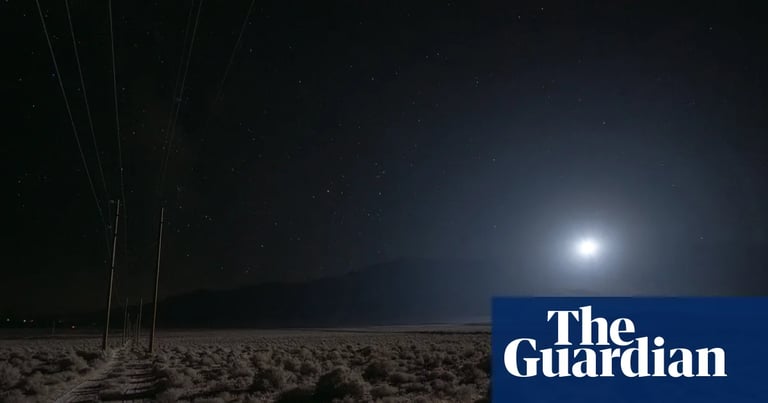


Reflect Orbital, a California space startup, has received FCC approval to test a prototype mirror satellite system designed to reflect sunlight onto Earth at night as part of a “sunlight-as-a-service” concept.
In a California demonstration, the company plans to illuminate Earth at night with a 59-foot mirror-equipped satellite, potentially lighting an area several miles across with brightness ranging from moonlight to noon-level sun.
The project is pitched as aiding emergency responders and solar-power operators by extending daylight-like illumination after dark, with initial demonstrations labeled experimental.
Critics warn about mass surveillance and military contracting risks, and point to questions about bypassing U.S. regulatory oversight by launching from India.
Earthjustice and other groups have urged a broader discussion and analysis before moving beyond the FCC’s initial approval and toward large-scale deployment.
Environmentalists and astronomers argue the project could disrupt the natural day-night cycle, affect wildlife and ecosystems, worsen light pollution, impair astronomical observations, and raise space-debris concerns.
Leaders of four international scientific societies warn that deploying orbital mirrors would introduce significant artificial light at night and environmental pollution with unknown impacts on circadian rhythms and ecosystems.
Colorado’s dark-sky community and DarkSky Colorado have raised concerns about impacts on astronomy and wildlife, with DarkSky International opposing the project.
The broader context includes solar geoengineering discussions about blocking or redirecting sunlight or using drones to modify weather for solar farms, all carrying safety and global-impact uncertainties.
Status remains experimental; Denver residents cannot activate the service, and the FCC’s role is to assess feasibility and challenges before any larger deployment.
FCC authorization covers Earendil-1 only and does not grant a global license to illuminate arbitrary Earth locations, inviting questions about jurisdiction and responsibility for light-directed satellites launched internationally.
Promotional imagery suggested beams brighter than the full Moon, prompting concerns from Lone Pine officials about regulatory compliance.
Summary based on 7 sources
Get a daily email with more US News stories
Sources
The Guardian • Oct 26, 2026
Sunlight at night: US startup’s demonstration of lighting Earth from space draws critcism