Democratic Congress Could Tighten AI and Data-Center Rules, Rattling Tech and Crypto
November 7, 2026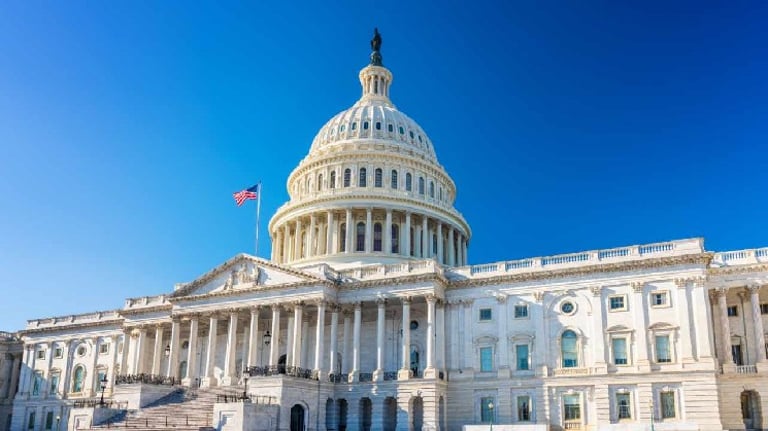


Galaxy expects Democrats’ control of both chambers of Congress in January 2027 to bring tougher scrutiny of crypto businesses linked to Donald Trump, while major digital-asset legislation is likely to stall.
On AI, Democrats plan to introduce bills covering the industry and data centers, moving away from the Republican-led Congress’s emphasis on accelerating development; they could also use hearings, must-pass legislation or efforts to override a veto to advance rules.
Public sentiment may give that push momentum: an October Reuters poll found most U.S. voters believe the administration and Congress are not taking AI risks seriously enough and support new regulations.
The demise of the CLARITY Act leaves the United States without a unified federal crypto framework, raising concerns that projects could move to more welcoming jurisdictions and that U.S. innovation and growth could suffer.
There may be no quick legislative fix: the CLARITY Act could return in revised form with stronger ethics terms, while scrutiny may come first and debate over stablecoin rules may focus on rewards or reserves.
Regulatory expectations could differ across the sector: banks want safeguards that give them parity, while crypto firms warn that overly restrictive requirements could limit competition.
The industry’s longer-term prospects may depend on building support across party lines by emphasizing applications such as investment funds, stablecoin payments and financial infrastructure.
Data-center developers are also facing local resistance: measures restricting construction or energy use passed in all but one of 41 local votes across 10 states, including restrictions in at least 14 Ohio towns and four Wilmington referendums rejecting rezoning by about 80%.
That opposition reflects concerns about energy and water consumption, noise, land use and community costs; Interconnected Capital LLC tracking counted 372 data-center moratoriums and 43 permanent bans nationwide.
Communities have also objected to secretive approval processes, including nondisclosure agreements and limited information about project scale, particularly in environmentally sensitive areas facing water scarcity.
Technology companies argue that rapid grid connections are needed for advanced infrastructure, but bipartisan pressure is growing to make data-center operators pay for the costs they add to the system.
That pressure could translate into requirements for long-term utility contracts, collateral and payment for grid upgrades, alongside more zoning disputes and moratoriums; Metro Colo tracking recorded 105 data-center-related utility filings across 45 states.
Summary based on 37 sources
Get a daily email with more US News stories
Sources

The Guardian • Nov 8, 2026
1-0 to humankind? US midterms vote puts AI, datacentres and the broligarchy back in their box
TechCrunch • Nov 7, 2026
After the midterms, things are looking rocky for Elon Musk and data centers

Vox • Nov 7, 2026
This election’s biggest AI story isn’t about data centers